
Jacksonville area women celebrate decades of friendship thanks to Beta Sigma Phi chapter
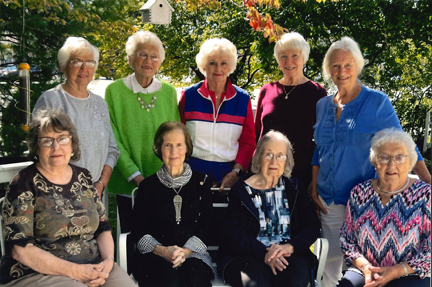
(Above) Pictured in the Preceptor Zeta Epsilon Sustaining Chapter group photo are (front row, left to right)
Pat Pennell, Shirley Morris, Pauline Milburn and Mary Dobbs. The back row (left to right) includes Peg Fernandes, Nancy Long, Donna Meado, Rosella Spreen and Marilyn Murphy. Absent from the photo is
Janet Wood.
By Lynn Colburn
It has been 69 years since a group of newly married housewives decided to start the 25th Anniversary Chapter of Beta Sigma Phi in Jacksonville. They weren’t the first chapter but are the only remaining chapter in town today. The women have been through a great deal together in life — learning, community involvement and more. The group solidified lifelong friendships that each member counts on.
As to how the sorority group began, Rosella Spreen, one of its founding members, says, “There were a bunch of us that were newly married, pregnant, or we had one or two children, and were all housewives because most women were at that time. If you had children, you stayed home to take care of your children. So, the group was sort of bored to begin with. Beta Sigma Phi’s founder, Walter W. Ross, of Abilene, Kansas, was celebrating the 25th anniversary of the international sorority. They had become a worldwide organization by then and already had eight chapters active in Jacksonville. So, we became the ninth, considered a 25th anniversary chapter.”
“The headquarters designed every meeting,” explains Spreen. “Each chapter had to meet twice a month, and we followed the program headquarters gave us. It was wide variety of topics covering things around the world … different countries, different world figures. They provided a general topic for members to develop their individual programs under. I remember I did one on Mahatma Gandhi. I’d never read about him before, but it was absolutely fascinating.”

“Anyway, mine was usually on books because I’m a reader,” continues Spreen. “We got started, we kept having babies and we kept growing. I started in 1956, the year after I graduated from high school. I was one of the original members. And I didn’t have a baby at the time. I think I was pregnant because my daughter Gloria was born in July, and this was in the spring of 1956.”
The sorority gave the women a way to challenge themselves. “As I said, most of us were housewives,” continues Spreen, “and our kids took naps, so you had time to do a little reading. We each took turns presenting a program.” Programs were the cultural part of the sorority – doing research and giving programs at every meeting.
“Members took turns giving the programs,” Spreen explains of the process. “And you could pay for a guest speaker if you wanted to, if you thought it was something everybody was interested in.”
The ladies always met in the evenings in members’ homes and took turns having the meetings. “I don’t know that we ever went over 20 members,” says Donna Meado, who joined the group in 1956, “because we wanted to get everyone into the homes.”
“Then we were also required to do social work according to bylaws,” explains Meado. “Like someone who needs help. We would raise money and help them. So, we had bake sales and used clothing sales. We sold nuts later, for about 14 years. We ordered them from a company in Chicago.”
“The most expensive thing we did was paying for a 7th or 8th grader boy, I think he was, who had malformed teeth,” says Spreen. “One of our members was a teacher and she brought it up to sorority. The group talked to an orthodontist about the cost of having the boy’s teeth fixed. The orthodontist gave them a discounted price off his regular rate.”
Meado says, “And that was our project for the next two or three years. That had to be a life-changer for that boy. So that was really the longest, most person-oriented thing that we did. However, if somebody lost their home and all their belongings, we usually had something to do with helping them out.”
Then Spreen, Meado and Marilyn Murphy, who joined the group in 1958, agreed one of their biggest fundraisers was raising Indian corn. Murphy says, “Bob Woods, a local farmer and member Janet Woods’ husband, planted the Indian corn for us. And it was our job to harvest it and sell it. We did that for, I’d say we did that for about 14-15 years at least.”
All agreed the group had fun doing this. “So, we raised and sold Indian corn at farmers market,” Murphy continued, “and to other customers and friends we contacted. Many of our customers would call us every year in advance to ask if we were still selling Indian corn. We mostly sold the colorful corn in wreaths – about three cobs for each wreath with a nice bow.”
Across from where Muggsy’s is today in downtown Jacksonville, there used to be the old jail building, left after the city built the new jail near the courthouse. The group would rent the building for a cheap price and use that building for any sales the sorority would have for corn, bake sales, clothing and more.
In addition, every year at Christmas their chapter had a Christmas ball. Meado says, “And believe it or not, we used to bake multiple turkeys, make Chex mix and have sandwiches and more. We also paid for a live band. We did it in various locations including the Knights of the Columbus Hall, the Elks Club, and the AmVets a couple of years. We hosted the Christmas ball for about 15 years. And it was very formal. We wore long dresses.”
Murphy says that someone even gave her the red velvet curtains from a school auditorium, and she made a long cape out of the material, lined inside with satin.
“We worked very hard on the Christmas ball and sold tickets,” Murphy continued, “so it wasn’t just for us. Most people who came also wore long gowns and dressed up. People looked forward to it. It was a Christmas ball, so that was back when women dressed up a little more, but you could come as you liked.”
Pat Pennell is the youngest one of the group and “has to listen to us all telling all the stories,” agree all three ladies. Five members are now 90 years old – Rosella Spreen, Donna Meado, Pauline Milburn, Peg Fernandes and Shirley Morris.
Spreen says, “We had very few members who quit or simply dropped out that stayed in town. Usually when we lost members their husbands got a job somewhere and they moved away. If you moved to a different town, Beta Sigma Chi International would send all the chapters a letter telling them that you were a member and you were moving to the town and asked chapters to be sure and call. You would be invited to all of the chapters that had a place for another member. So that is how they would keep their members in the larger organization.”
“We would also rush,” says Murphy. “Every year the international organization would encourage chapters to rush for new members. But our chapter tried to stay between 15 and 20 members.”
Beta Sigma Phi used to have a city council during which one member from each chapter attended. “This way each chapter could put your two cents in for some idea that you wanted to get going,” says Meado. “Or if you had a really good guest speaker, you wanted to encourage the others to have also.”
Every chapter, during its first year, was assigned a sponsor to the group by International. “Mrs. Eddy was our big sponsor when we began and every year she invited the chapter presidents to a big luncheon,” says Spreen remembering it was a big deal. “If you were the member who was on the city council you got invited to Mrs. Eddy’s house on Finley [Street] for lunch and it was always a tea, really delicious and usually oriental.”
The ladies also remember Marion May and Ruth Wade being sponsors.
In addition, every December, all of the chapters held a joint meeting/party to which all members were invited. The ladies say this was held at the Virginia Country Club.
“Sorority is becoming a thing of the past; it hasn’t breathed its last breath yet. The headquarters still have an office,” says Meado, “but I think they are down to two staff, and they used to be huge! This is also the last chapter left in Jacksonville.”
The group today, known now as Preceptor Zeta Epsilon Sustaining Chapter, since the chapter no longer has regular meetings and does not follow the program plan, has 10 members. Four original 1956 members remain: Spreen, Pauline Milburn, Peg Fernandes and Shirley Morris.
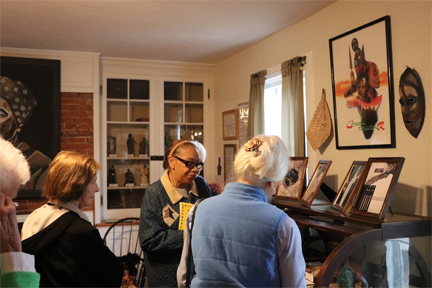
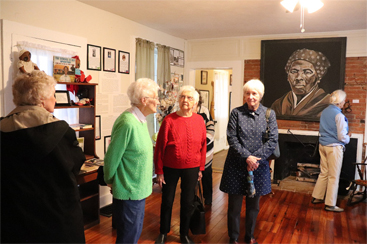
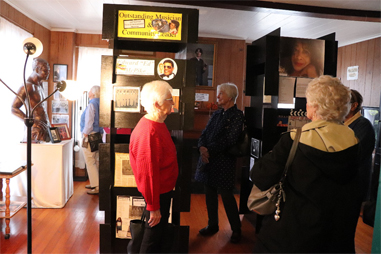
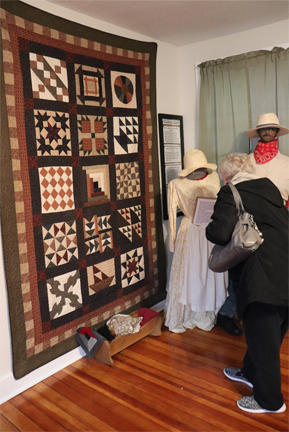
They do still meet up to do things, such as their outing on November 18, 2024, when the group toured the Asa Talcott House, a location in the historic Underground Railroad (UGRR) and now the home of the Jacksonville African American History Museum. They were hosted and given a tour by the museum’s president and treasurer, Alberta Johnson.
Meado says, “We are a really close group. Shirley and I have been friends since 1949 in 8th grade!”
Murphy agrees saying, “We’ve all gone through a lot, and we are there for each other. We are family.”
George Murphy, Marilyn Murphy’s husband, is the only living spouse remaining in the group. She says, “And I don’t know what I’d do without him!”
Marilyn Murphy continues, “So many in our sorority family have also lost children, too. Shirley has lost three children.” Murphy also lost a child to a drunk driver and she and George have been advocates and active in Mothers Against Drunk Driving (MADD) since.
After all the years in this group together and working together, these ladies are still there for each other — what a wonderful thing. That doesn’t always happen. It is a special group who have learned together, had fun together, helped others together and supported each other through decades! Everyone should be so lucky to have such friends! Thank you, ladies, for your community mindedness for all these years.
Captions
Pictured in the Preceptor Zeta Epsilon Sustaining Chapter group photo are (front row, left to right) Pat Pennell, Shirley Morris, Pauline Milburn and Mary Dobbs. The back row (left to right) includes Peg Fernandes, Nancy Long, Donna Meado, Rosella Spreen and Marilyn Murphy. Absent from the photo is Janet Wood.
Members of the Preceptor Zeta Epsilon Sustaining Chapter visit the Jacksonville African American History Museum, located in the Asa Talcott House, on November 18, 2024. Pictured from left to right are Peg Fernandes, Donna Meado, Shirley Morris, Rosella Spreen, Pat Pennell, Nancy Long and Marilyn Murphy. Not in photo: Pauline Milburn, Mary Dobbs and Janet Wood.
