
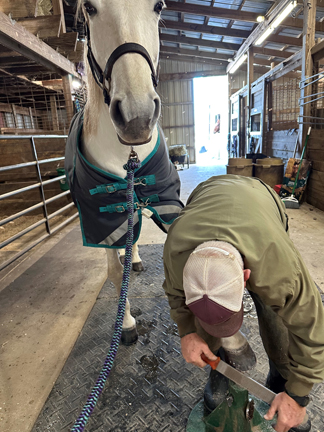
Winchester’s Ted Rhoades soon to begin his 49th year as a farrier
By Eric Thomas
Day in and day out, most all of us work. It makes life go around. One local man has spent decades doing something that is unique, and he loves his work.
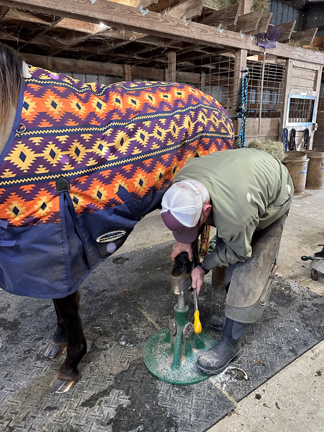
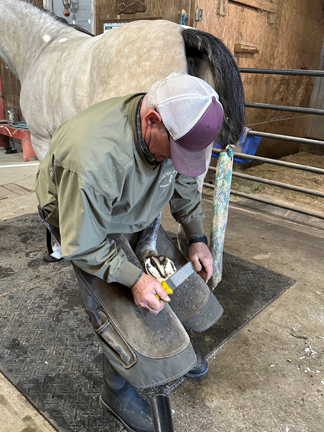
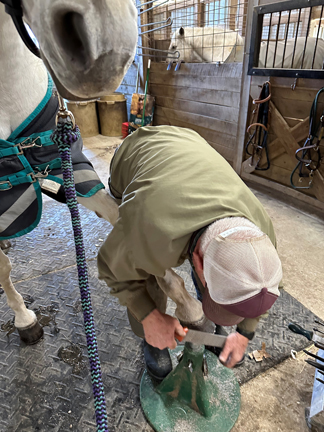
Ted Rhoades of Winchester is a horse farrier. Sounds interesting, doesn’t it? His work ties to the equestrian world, and having a good farrier is essential to a horse’s health.
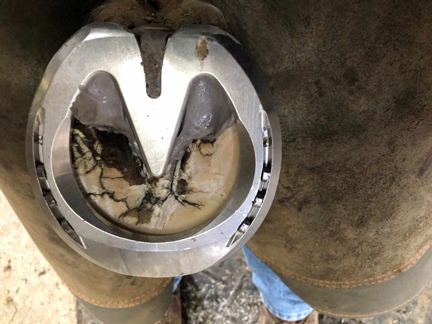
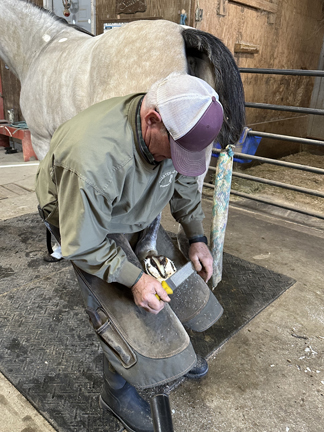
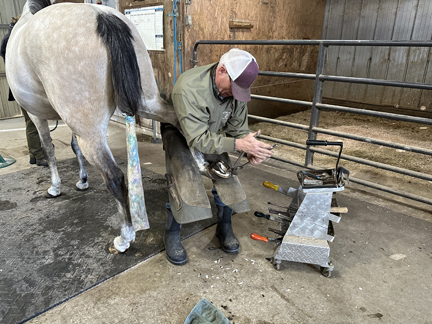
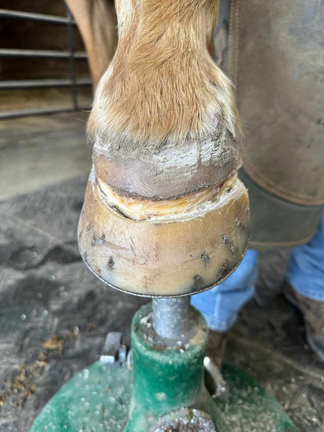
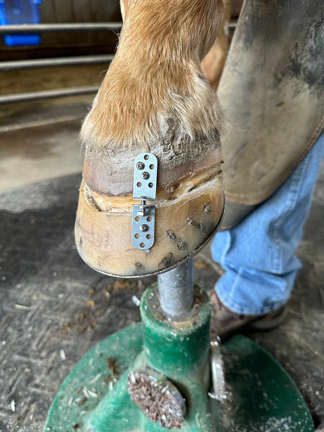
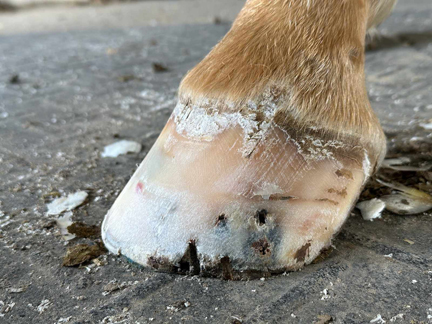
The horse farrier is responsible for trimming, cleaning, caring for and shoeing horses’ hooves. An appointment with this person can be to remove the horse’s old shoes, trim the hoof, file and remove all the dead hoof cells from the sole and hoof wall, and put new shoes on the horse.
In June 1976, Rhoades decided to learn all there was to learn about this line of work. “I went to horse shoeing school in Macomb,” he said. “It was a 12-week course where we were taught how to make homemade horseshoes, to tie in hoofs, and how to apply horseshoes.” After completing the course, equivalent to two semesters, he had to be certified with the state of Illinois. This June, Rhoades will begin his 49th year as a horse farrier.
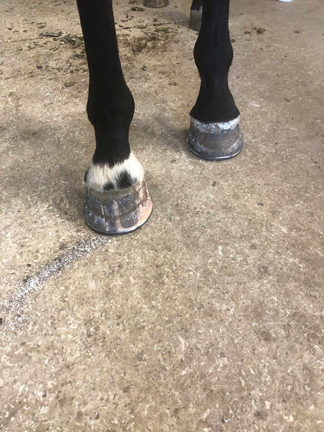
Typically, shoes are put on horses to help them wear down their hooves less than they would without them. Shoes offer protection and support; by wearing them, the hoof is less likely to crack, wear down too far, or suffer complications.
“We normally don’t shoe a horse until they start riding them when they are 2 or 3 years old,” Rhoades remarked. “But that is not the first time the horse is worked on.” The horse has to be trained to let you handle its hooves, so many horse owners start trimming their young horses when they are 3 to 4 months old.
Rhoades services a 50-mile radius around Winchester. Just like in the old days, he is like many doctors who made house calls. “I have several stables that I go to,” he said. “In addition, I make stops at homes that only have one or two horses.”
As a general rule, the horses for which Rhoades cares are on a 6-8 week rotation. “Currently, I have around 300 horses that I work on,” he concluded. “Some of them just get their hooves trimmed while others get shoes replaced.”
Because they are worked on frequently, he reschedules them for their next session each time. In January of each year, he fills out the appointment calendar for the whole year. At this point, he has no open days for 2025. “It is great to have the whole year planned out,” he added.
Paying for the services of a good, professional farrier is important to make sure a horse is healthy, and the hooves are being well managed and taken care of. Offering proper care to a horse is crucial for their health and survival.
Rhoades and his wife, Debra, live in Winchester. He is also the pastor of Cornerstone Baptist Church of Winchester.
