
By Jenny Sauer-Schmidgall
There are several different types of livestock operations. But, what is an operation exactly? Basically, it is where you have female cattle and they have their calves. Depending on their weight and age, you then wean them from their mothers.
Typically this is done around 5-7 months and it depends on the growth of the calf. Not all calves grow at the exact same rate. If the calf looks to be too small, you want to give it a little more time to put on some healthy weight.
This weaning isn’t something that is meant to be cruel, but you do not want a one-year-old calf still nursing on the mother. Like female humans, it takes a lot of energy and feed to produce milk. In the cow world, you want the female cow to be strong and healthy for another round of breeding.
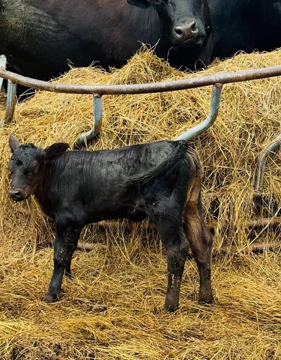
Once you have weaned the calves, then you have to decide where they go next. Do they go to the feedlot, back out to pasture or to the sale barn? There are many different reasons why some producers choose any of those options. For our operation, right now, we have saved our heifers (females) for three years now. We are trying to grow our herd with our preferred stock — the cattle that are friendly and fun, as well as to help maintain full beef freezers in our store. I prefer to raise our cattle as my father and grandfather did by just giving them a good life. The mothers do us a huge favor by raising young ones and providing people with beef; it’s only fair that you let them live out their life in the pasture as long as possible. Money is nice, we all know this, but so is compassion for the animals that help us make a living.
For a stocker/backgrounder operation, which we don’t do, they wean the calves and then put them out to pasture to pack on some more weight before taking them to market or auction.
Another operation that is not like ours is the feedlot operation. It means you place your cattle into a lot that is comfortable enough for the amount of cattle you place in there, and feed them grain and sometimes hay. Not all operations have enough pasture for their cattle. For us, we have a tiny little pasture for our fat cattle. These fat cattle are what go into our beef freezers, or we send them to the sale barn.
I’m not a huge fan of cows being on concrete. They weren’t made to walk on concrete. However, some operations don’t have any option but to have them on concrete. You cannot knock someone for having them on concrete because large amounts of pasture simply aren’t as available as they used to be.
That has to do with some farmers converting it to tillable/row crops like corn and soybeans. It is also because there are fewer and fewer cattle producers. I could go down that rabbit hole, but it’s a lot of work, and it’s work every single day … we do not get off weekends or holidays. You have to love cattle if you want to be in the business of cattle.
Seedstock operation is another type we don’t practice. It’s basically breeding a certain type of genetics that performs well for certain types of what other cattle producers are looking for (i.e. bulls for breeding, females for breeding/size). It’s breeding purebred cattle for genetic improvement. We simply do not have the manpower to do this. We have many other things going on that this is something that would not help make our operation efficient.
We have used it for breeding our Angus with Wagyu, though. My friend out in the State of Virginia started that for us. He only deals with cattle; he is not a diverse farm like us with row crops and a farmers market store. People that want to go into a seedstock operation really want to purchase from people that do this for a living because you need to be “on top of it” if you’re breeding for perfection. We do, however, have over 60 years of purebred Angus genetics in our herds.
Every farmer is different, and every farmer has different ways of making things work best for them. What we do isn’t the perfect, right way of doing things — it’s simply what works best for us and our customers.
*Jenny Sauer-Schmidgall is a third-generation farmer in Scott County. Jenny and her husband, Mark, operate a row crop farm and tend to a herd of 80 cattle. They own and operate the farmers market style store, The Witty Farmer/Grab ‘n’ Grow Greenhouse, in Riggston.
