






Bound to Stay Bound’s legacy continues in Jacksonville and beyond
By Ben Cox
Photos/Submitted
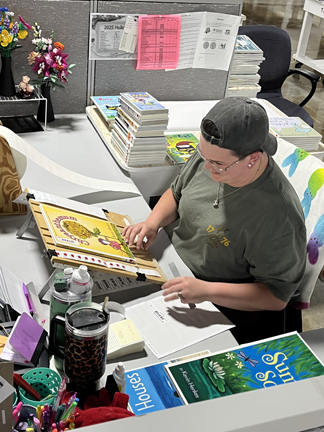
The history of the book binding industry in Jacksonville is tied to the ongoing legacy of Bound to Stay Bound Books. Known as the “quiet giant” in the bookbinding industry, Bound to Stay Bound Books’ reputation has largely been secured by its history of innovation, staying family oriented and earned respect.
Three generations of the Sibert family have realized the value of high-quality standards, high-quality binding with the latest techniques and materials, and listening to their customers. The time-honored tradition of bookbinding in the United States predates the turn of the 20th century, but it’s right after World War I that the story of Bound to Stay Bound Books begins.
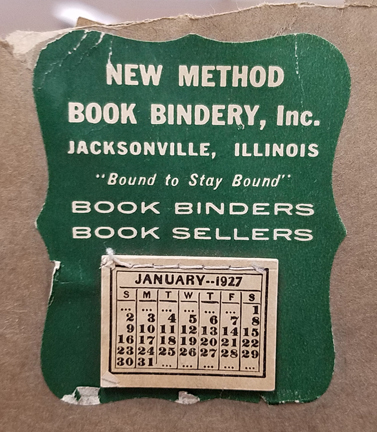
Lawrence DeWitt Sibert, or L.D., started working in the bookbinding industry in his late teens for the Ward Brothers printing and bookbinding firm in Jacksonville. L.D. worked alongside others as they bound books for private libraries of lawyers, doctors and other professionals in the region. Between 1898-1919, industrialist Andrew Carnegie began helping to establish the U.S.’s free library system, spending more than $56 million of his own fortune to build 2,500 libraries throughout the U.S. and Canada. The boom led to several innovations in the bookbinding industry and a burgeoning of business. During World War I, with leather in short supply for the war, L.D. devised a method of bookbinding using heavy cloth materials for oversewing book pages to the endleaves. It was this innovation and subsequent patent that led Sibert and his brother-in-law, William T. Suhy, to establish New Method Book Bindery, Inc. in Jacksonville on January 20, 1920.
Sibert and Suhy leased the second-floor space in the Degan Dance Hall building located at 220 South Main St. in Jacksonville (present-day Good Time Doc’s), which had then housed the Purity Candy Company. Just a few years earlier, Sibert and Suhy worked with the American Library Association to develop and standardize their binding process. Sibert stayed in Jacksonville to operate the machines while Suhy traveled extensively to secure orders. The books were, at first, hand sewn, until in 1926 when the partners purchased an oversewing machine for $4,625 (equivalent to over $83,500 in today’s money). By 1923, the business purchased the three-story Jacksonville Business College building at 201 South Kosciusko on the corner of Morgan Street to expand operations. According to 1924 numbers, the bookbindery was producing 450-500 books per day. The bindery expanded to Roodhouse for a short time near the end of the 1920s but eventually returned all operations to Jacksonville. By the beginning of the 1930s, the business at Kosciusko had expanded with a two-story addition to accommodate the growing business and new, highly specialized binding equipment — bucking the trends of The Great Depression.
It is in this phase that L.D.’s son, Robert F. Sibert, began working at the bookbindery while attending Jacksonville High School. Robert’s gift for the business showed up right away, as he developed a new card inventory system that was used for many years. After Suhy retired in 1937, young Robert became the company’s treasurer and also assisted his father on the road making sales calls and handling other management duties. When the Ward Brothers bindery closed in December 1937, the Siberts paid $1,000 for that company’s remaining bookbinding materials, shipping chests and correspondence while the machinery was sold off to a firm in Chicago. Approximately one year later, Robert suggested order pickers wear roller skates to help fulfill orders in the inventory shelving warehouse quicker instead of using carts. The method was used for over 70 years.
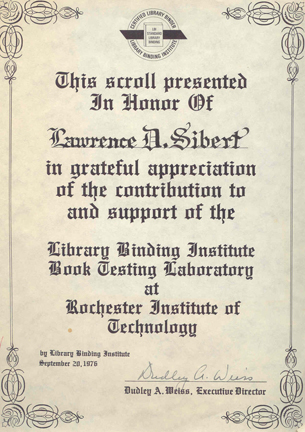
L.D. wasn’t done with his own innovations either. He helped to establish the Library Binding Institute in 1935, a trade association designed to regulate and control the quality of library book binding. Elected as the LBI’s president in September 1941, L.D. would be reelected two terms; he served until 1946 — working to improve quality while manpower and material shortages were plenty during World War II.
After a lengthy stint in World War II and getting married, Robert returned to the bindery’s team management with his father. In 1959, Robert became the LBI’s president and continued on the path of innovation and technology his father had started all the while helping to maintain industry standards.
By 1948, New Method Book Bindery was the largest single binding business unit in the world. The annual payroll exceeded $300,000 and the average yearly production was 500,000 books — mostly children’s and young adult books. In 1952, a third floor was added to the two-story 1931 addition on Kosciusko. In spring 1932, after an analysis of the prebinding and rebinding departments, the Siberts decided that better service could be given to libraries if the two departments were separated so they decided to form a separate corporation for the rebinding business. The Siberts conferenced with the Hertzbergs and decided to form a new corporation for three firms under one umbrella in Jacksonville. In December 1953, a separate company, Hertzberg-New Method, was formed at a newly constructed one-story building on Vandalia Road in South Jacksonville. Ninety employees moved across town with the new business, which formally opened its doors on June 17, 1954, with a dedication ceremony. Then Illinois Governor William G. Stratton attended, issuing a “Book Binding Day” proclamation. Jacksonville was officially designated as the “library binding capital of the world.” Some 400 dignitaries and librarians from across the country attended to mark the occasion, including a dinner and ceremony at MacMurray College.
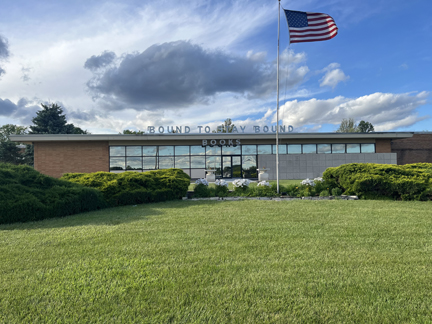
Once the separation took place, the Siberts again went to work on making their prebinding process more efficient and far-reaching. Despite fierce competition across the country, the growth of New Method Book Bindery continued. The company purchased six acres of land on West Morton on the then far west edge of Jacksonville and hired architects to build a new state-of-the-art facility in 1958. L.D. Sibert personally planned the layout of the new facility alongside engineers for maximum use of an over 43,000-square-foot building that is now the company’s permanent home. The slogan, “Bound to Stay Bound Books,” would adorn the facade. Construction on the West Morton facility began in the spring of 1959, with a dedication ceremony of the new facility held on December 6, 1959.
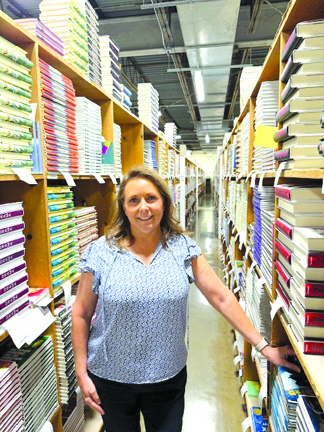
By the mid-1960s, inventory approached one million books of more than 15,000 titles, reaching all across the country. An addition to the West Morton facility came in 1964, as did an IBM 1401 Data Order and Inventory Processing system to handle all the book titles. New Method was the constant amid Jacksonville’s industry expansion from the late 1950s into the mid-1960s. At the end of 1964, L.D. Sibert retired as president of the company and became chairman of its board of directors. Robert succeeded him as president and general manager. In 1966, the company began buying catalog cards from various library vendors and instituted a processing department to prepare and ship the cataloged books with the orders, allowing library books to be shipped out pre-processed and head directly to shelves. The catalog services are personalized for each vendor and library across the country.
By 1967, the Siberts sold their interest in Hertzberg-New Method, Inc. and in January 1970, celebrating their 50th anniversary, rebranded to Bound to Stay Bound Books, Inc. By that time, the West Morton facility had expanded three times.
Big changes took place in children and library book publishing from the 1970s-1990s. Big publishers ate up smaller publishers. The Thor Hammer tax decision in the 70s changed how inventories must be valued, leading to shorter print runs of books. The Siberts continued to ebb, flow and innovate with the times. They purchased their own cover art/graphics company in the 1970s and by the 1980s, had grown the business to five presses, printing more than 1 million covers on an annual basis.
In 1978, the third generation of the Sibert family joined the firm, Robert “Bob” L. Sibert. Bob spent time in Scotland studying binding methods before returning to Jacksonville to assist his father in running the family business. In 1982, Bound to Stay Bound hired Sharon Zuiderveld, a librarian, to correct and re-catalog the company’s inventory and then all new titles using the company’s new machine-readable cataloging computer system. The MARC record system is still used today by the company as libraries have gone to digital cataloging, making Bound to Stay Bound a profitable company today.
In 1983, the Siberts established the Bound to Stay Bound Books Foundation, the philanthropy arm of the company providing college scholarships, donations to Illinois College, donations to the Jacksonville Public Library and school libraries in the region and throughout the country, donations to the YMCA and the Jacksonville Area Museum among many others.
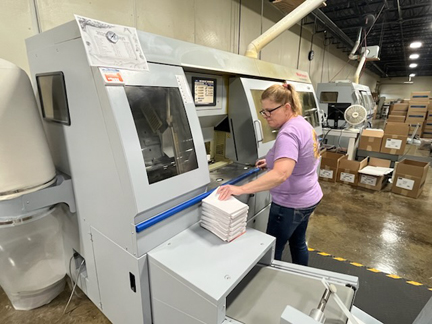
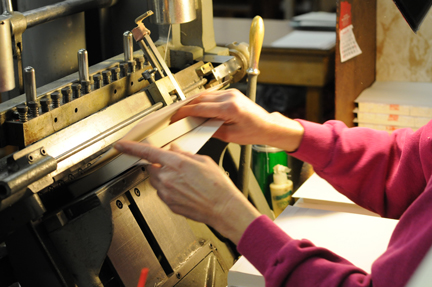
A seventh addition to the West Morton facility came in 1991 and an eighth came in 1995, bringing the building to 107,000 square feet of floor space. In 1992, Robert “Bob” L. Sibert became president of Bound to Stay Bound, while Robert F. Sibert retired to the chairman’s chair. Bob was the first to initiate scientific testing on prebound books, which showed that Bound to Stay Bound’s books were made to outlast others. By 1993, the company was producing all its own covers. Digital printing instead of offset printing would be the standard by the end of the decade.
By the end of the 1990s, the company was one of the first to offer their catalog for ordering on the fledgling Internet. By 1998, the company had a roster of 280 workers and an annual payroll of more than $5 million, with 10% of the workforce having been associated with the firm for more than 25 years. Posthumously in 2001, the Robert F. Sibert Informational Book Award was established through the American Library Association.
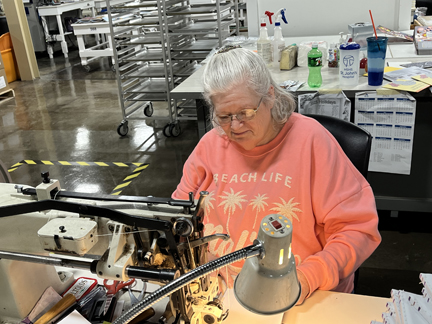
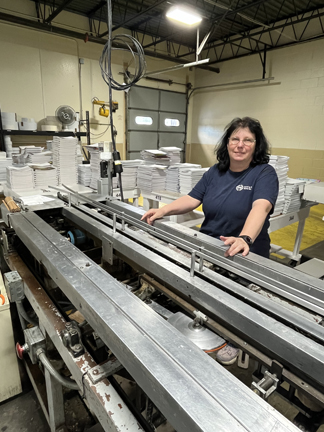
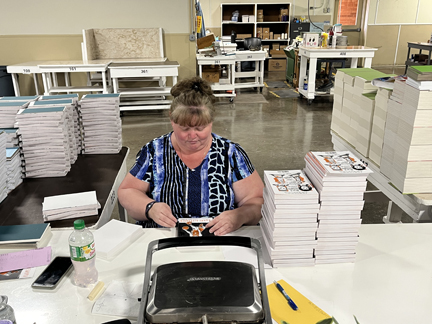
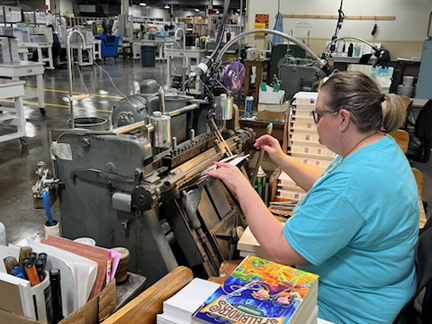
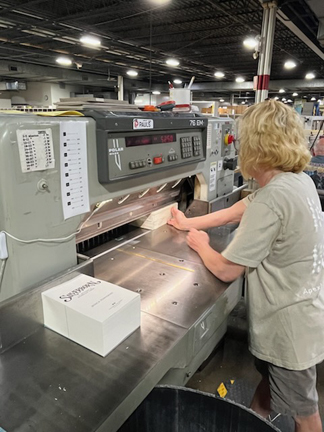
After the downturn of Jacksonville’s industry came in the late 90s, Bound to Stay Bound Books endured and maintained its nationwide presence. Automation, computerization and innovation, though, have led to a downsize in its workforce from previous years. Still, in 2025, the Siberts and Bound to Stay Bound Books remain an integral part of the fabric of the Jacksonville community and bookbinding industry. The company celebrates its 105th anniversary this year.
This excerpt of the history of Bound to Stay Bound Books is based off research and the book, “Books that stand the test of time: The story of Bound to Stay Bound Books, 1920-1998,” written by Janice A. Petterchak.
