



Writer, photographer David Blanchette gives us a unique view of exotic lands
By David Blanchette
When wild elephants, Cape buffalo, giraffes and lions crossing the road is a routine occurrence, you know you are in a special place.
The Masai Mara National Reserve in Kenya is a place like no other on earth, a palette of flora, fauna and friendship that my wife, Sue, and I experienced during a February safari trip to Africa. The landscape and its inhabitants drew us in with an intoxicating mix of sights, sounds and experiences that truly made the journey the trip of a lifetime.
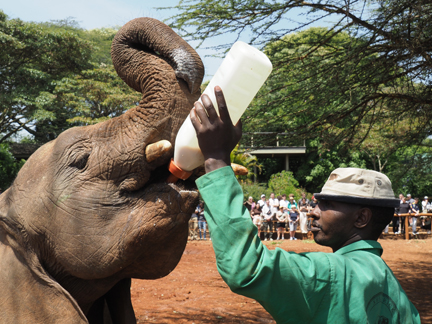
It began shortly after our arrival in Nairobi, Kenya, where a visit to the Sheldrick Wildlife Trust sanctuary introduced us to orphaned elephants that are being raised for eventual return to the wild. Have you ever touched an elephant? Their skin feels like a warm, bristly, breathing papier-mâché creation offset by impossibly long eyelashes that blink directly into your heart. We watched oversized juveniles eagerly gulp formula from huge bottles and were reminded why many people feel a kinship with these intelligent, long-lived animals.
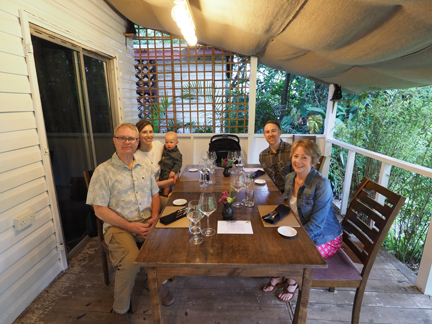
Nairobi’s endless chaotic, vendor-shack-lined streets effectively hide some of the huge city’s culinary gems including Embark, where we were treated to a seven-course meal prepared by local chefs using a daily-changing, local ingredients menu. The half-acre sanctuary and its covered-patio dining area sits only a few hundred feet behind one of Nairobi’s busiest streets and is accessible only by a hard-to-find, narrow gravel drive. Once inside, we were spoiled by the staff who described each course and accompanying beverages while giving us a lesson in the area’s natural bounty from where our meal had come.
We had to pack light for our journey because the small planes that flew us from Nairobi to our safari destination had a luggage limit of just 33 pounds per person. Two landings on dusty, red-dirt runways later and we arrived at our destination, an airstrip just outside of the Masai Mara where the only airport structure was an open hut. Here we were greeted by our safari guide, who held up both hands and exclaimed “Jambo! Jambo!” We were never far from that Swahili “hello,” and literally everyone we met during our entire stay offered us that warm greeting.
Next came our arrival at camp, which would be our home for the next week. The term “glamping” is an accurate description of the &Beyond Bateleur camp, five-star accommodations and dining that just happen to be covered in canvas. Suffice to say that we weren’t “roughing it” while in camp.
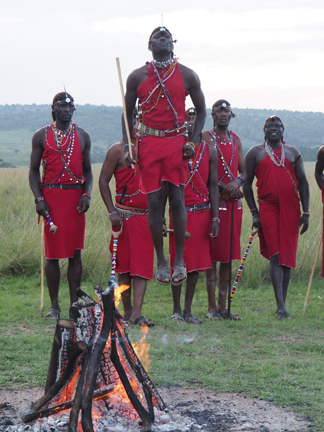
Our safari guide, Jackson, spoke English very well and was always attired in safari-style clothing. I only mention this because Jackson, which is his English name, is a Masai warrior and has done all of the grueling initiations that young men must do to earn that title. Masai men in their warrior attire performed ritual dances for us during our stay, including one where participants vie for the hands of young village women by jumping vertically as high as they can. Jackson, as a Masai, is very in tune with the Masai Mara, at times eerily so, and he would demonstrate that prowess repeatedly during the week.
We received some important safari instructions before we headed out on our first “game drive,” so called because you drive to where the animals (hopefully) are. Instruction number one: Stay inside the vehicle at all times, and stay still and quiet when instructed. Jackson explained that animals, especially the ones that can eat, gore or crush you, see a vehicle as one big, innocuous entity, not a moving pod with individual meals inside. As long we stayed inside, and kept still and quiet when the animals got really close, we should be OK. Good to know.
A manual transmission, right-hand-steering, Toyota Land Cruiser pickup truck with six seats and a canvas cover atop the bed was our conveyance on each of the 12 game drives we took. That vehicle never met a stream, mud puddle or rocky path that it couldn’t cross as we traversed the Masai Mara’s extremely bumpy, single-lane red dirt paths.
The morning game drives started in the dark before 6 a.m. and required dressing in several heavy layers, because it gets deceptively cold on the equator during the night. The afternoon game drives, typically starting at 3:30 p.m., often saw us wearing shorts as the temperatures climbed to the mid to upper 80s.
We commonly encountered animals along or in the road during those game drives. Elephants were the most common traffic jam, and we were often so close that we could listen to them rip grass from the ground and hear their molars crunching on the vegetation as they methodically plodded along and ate.
On several mornings, just as the sun was coming up, we came upon a pride of lions with cubs just waking up from sleeping in the road. At one point, staying still and quiet as instructed, I watched as an adult female rubbed her cheek on the vehicle’s running board just inches away from me, much as I’d watch a house cat marking its territory. Then we crept along following the pride as its members sauntered down the road with the cubs frolicking along the way.
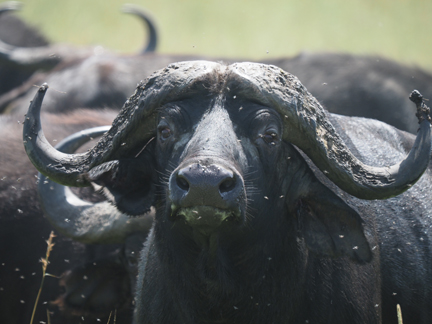
Those lions may seem cute and cuddly, but we also watched another pride as adults and cubs devoured a Cape buffalo they had killed while opportunistic hyenas and vultures watched and waited for their chance at the reeking, fly-infested kill. We also came upon several lions, cubs included, who had been severely injured after a fight with a competing pride and we could only watch helplessly as they limped by.
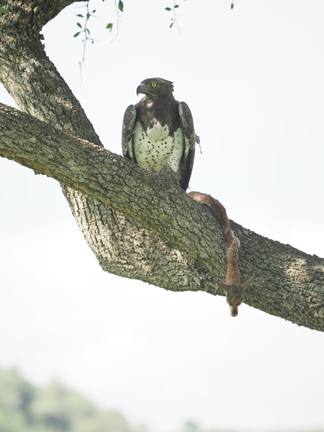
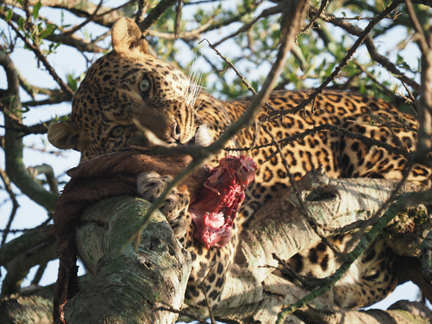
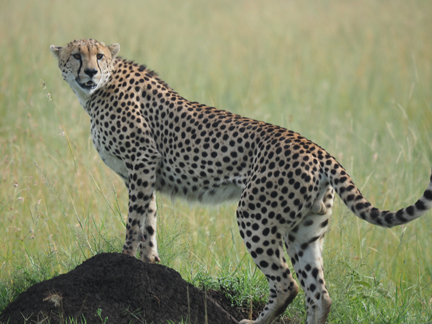
In a scene that even Jackson said he had never seen before, we saw a leopard that had been treed by three cheetahs, who held the leopard hostage in the tree before getting bored and loping away. We saw another leopard feasting on a fresh kill, also in a tree, with hyenas waiting below for any scraps. Careful eyes spotted a huge Martial Eagle in a tree with its next meal, an infant gazelle it had just killed and then draped over a high branch.
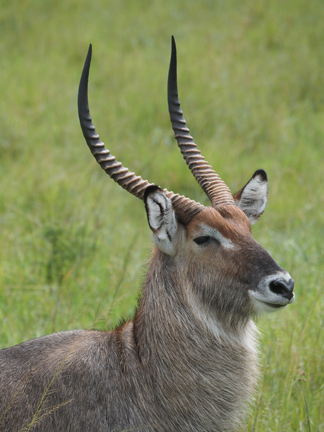
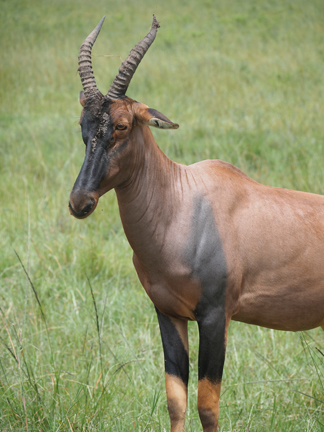
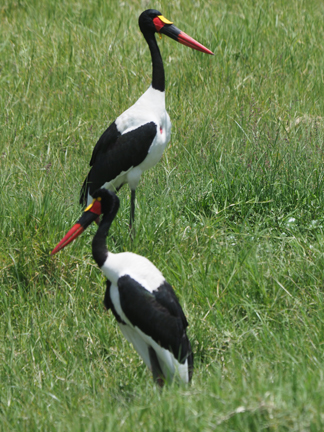
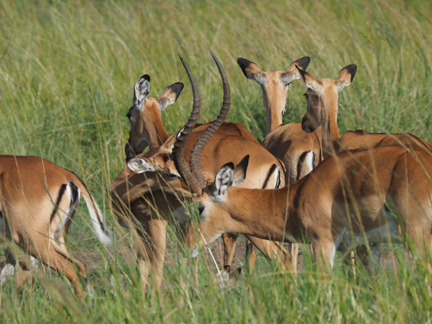
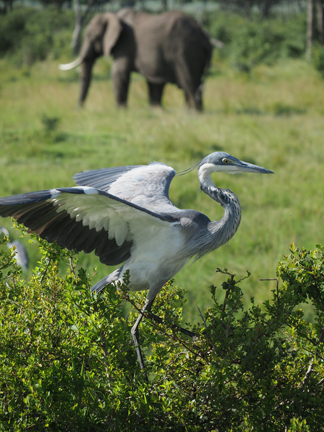
Elegance and grace abounded in the Mara grasslands. You can see giraffes from miles away and the closer you get the more majestic they appear with their flowing, rocking gait, impossibly long necks and large, lash-shaded eyes. We were amused by the svelte male impalas as they frittered about trying to keep their large harems of females intact, while wanna-be males shadowed the group awaiting their chances. The regal waterbuck with its imposing antlers and beard, the termite-mound-sentinel Topi surveying the plain, and the myriad of fascinating birds meant there was always something to see from our vehicular vantage point.
Hippos don’t look graceful but they can move that enormous, bulky body with surprising speed, and the one that didn’t want to share the path with us looked positively menacing. Watching a rhinoceros with its saber-like horn trample through the tall grass evokes dinosaur visions, and white egrets atop Cape buffalo backs is a symbiotic study of black and white as the buffalo munch grass and the birds dine on the insects they disturb.
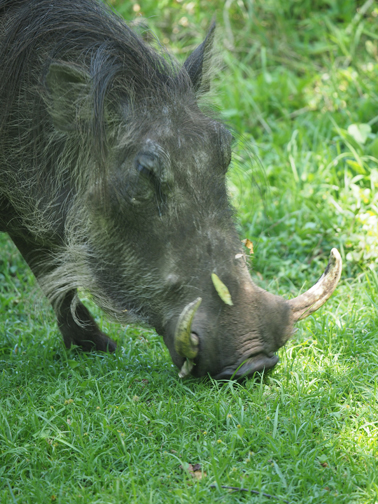
Then there’s the comic relief. Warthogs, known as pumbas locally, brought their only-a-mother-could-love snouts right through our camp’s outdoor dining area as they chomped on vegetation, played, and rooted in the sand. A lightning-quick monkey made quick work of our breakfast rolls one morning as it scampered across our table, knocking over dishes on its successful quest for an impossibly-large armful of bread products. What we thought was terrified screaming in the night was actually the call of the hyrax, a cuddly-looking nocturnal creature with an outsized voice. A bush baby, a stuffed-animal-looking primate, enjoyed its nightly romp across our tent roof.
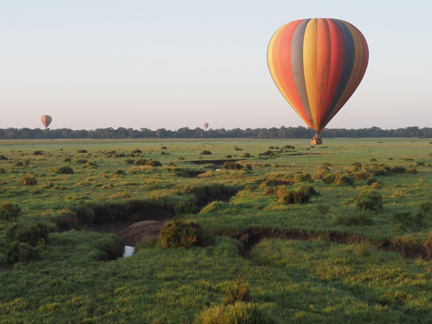
The safari had its truly transcendent moments. I took a hot air balloon ride at sunrise over the amazingly diverse Mara plain and marveled at the colors and textures of Africa from a new perspective. We also had meals prepared and served in the bush including a couple of breakfasts during morning game drives. The locations for these breakfasts had to be carefully chosen so the diners did not become the entree, and “picnic trees,” lone hilltop trees amid shorter grass, were the ideal site.
Throughout the entire safari experience we were amazed and humbled by the kind, open and passionate Kenyan people. They appreciate the treasure they have in the Masai Mara and enthusiastically welcome visitors who want to experience it. One of the most difficult moments of our journey was the very end, when the staff at &Beyond Bateleur sang “Hakuna Matata” (“no worries” in Swahili) as they bid us goodbye.
And because they suspected that we might want to come back some day, we parted with “baadaye” — see you later.
