
By Ken Johnson
As temperatures warm and spring progresses, our landscapes come alive. Plants resume growth and begin flowering, insects emerge and hummingbirds return. These charismatic birds captivate us with their iridescent plumage and aerial agility. Many gardeners put out feeders to attract hummingbirds, but there is much more we can do to make our landscapes attractive and hospitable for them.
Hummingbirds in Illinois
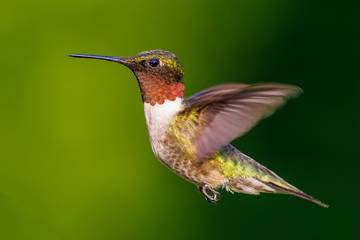
There are more than 360 species of hummingbirds worldwide, but only one, the ruby-throated hummingbird (Archilochus colubris), breeds in Illinois. Each spring, they migrate north from overwintering grounds in Mexico and Central America. During this journey, many cross the Gulf of Mexico in a nonstop flight of about 600 miles that can take more than 16 hours.
Ruby-throated hummingbirds typically begin arriving in Illinois in mid to late April, though timing can vary from year to year. They spend the summer across the eastern U.S. and Canada before returning south in late summer and fall.
Plants for hummingbirds
Nectar is an essential part of a hummingbird’s diet, and incorporating nectar-rich flowering plants into a landscape is one of the best ways to attract them. They are especially drawn to tubular red, orange and bright pink blooms, though they will also feed on flowers of other colors.
Perennials such as columbine, cardinal flower, trumpet honeysuckle, foxglove beardtongue and blazing star are readily visited by hummingbirds. Trees and shrubs like red buckeye, tulip poplar and rose mallow are also attractive. Good annual options include flowering tobacco, jewelweed and fuchsia.
Grouping plants together makes them easier for hummingbirds to locate and increases feeding efficiency. Planning for continuous bloom from spring through fall helps ensure a consistent nectar supply.
Don’t forget about insects
While nectar provides the sugar hummingbirds need for energy, insects are an essential — and often overlooked — part of their diet, especially during egg laying and while raising chicks. Hummingbirds feed on small insects such as gnats, aphids, mosquitoes, caterpillars, insect eggs and even spiders. Providing flowering plants and pollinator habitat helps attract insects that hummingbirds can feed on.
Trees, shrubs and nesting habitat
Landscapes with a mix of trees, shrubs and open garden areas closely resemble the preferred habitat of ruby-throated hummingbirds. They depend on trees and shrubs for nesting, perching and protection from predators. Female hummingbirds build small nests on branches, using plant fibers such as thistle or dandelion down, bud scales and lichens. Spider silk is used to bind materials together and attach the nest to the branch (so leave the spiders!).
Water
Hummingbirds use water for both bathing and drinking and often prefer shallow sources. Birdbaths with stones or shallow dishes, as well as small misters, work well. As with any water feature, regular cleaning is important.
Hummingbird feeders
Hummingbird feeders can be a useful supplemental food source, especially early in spring when few flowers are blooming or during fall migration when birds are fueling up for long journeys. However, feeders should supplement, not replace, natural food sources.
Fill feeders with a solution made from one part white granulated sugar to four parts water. Honey, brown sugar, raw sugars, corn syrup and red dyes should not be used, as they can ferment quickly or cause health problems for hummingbirds.
Try to place feeders near shelter and perching areas, flowering plants and in partial shade when possible. The sugar solution should be changed every 2-4 days during hot weather, and feeders should be cleaned weekly to prevent mold and bacterial growth.
*Good Growing Fact of the Week: Once hummingbirds identify reliable habitat, they often return to the same locations year after year.
