

Former Carnation plant has been producing Coffee mate here since 1970
By Ben Cox
Photos/Submitted to The Source
Coffee mate has been a part of Jacksonville’s manufacturing community since 1970. The five-acre campus sits on Jacksonville’s northwest side.
Carnation was the first iteration of the plant’s name when it began. Production at the facility didn’t begin fully until 1971, but Jacksonville packaged and sent its first package of the famous powdered coffee creamer down the railroad track in 1970.
Carnation was said to have been looking at 16 different sites to place a new production facility at the time but ultimately landed on Jacksonville due to its proximity to the manufacturers of Coffee mate’s two main ingredients, corn syrup and vegetable oil. At the time, Jacksonville was a hub of robust industrial growth. The city was near 21,000 in population, had great access to multiple modes of transportation, was centrally located and city officials were willingly working with the industrial sector to bring jobs to the region.

Sources say the new plant cost $44 million to construct (equivalent to a little over $366 million in today’s money) and the plant’s manufacturing capacity was 50 million pounds of Coffee mate production per year. When the plant opened, it started with approximately 60 employees, and after a mid-summer ramp up of production of the product, 40 more people were added before the end of 1970.
Over the years, production of the product has dramatically increased since the introduction of new technology, computers and automation.
The number of people the plant has employed has shrunk since those early days of production now that technology and automation has made certain processes easier and quicker.
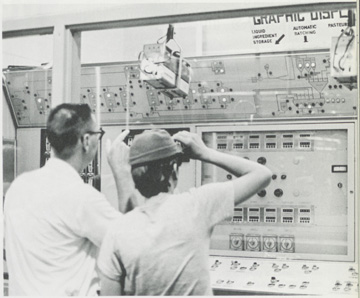
Currently, the plant employs about 170 people but still produces nearly 200 million pounds of Coffee mate per year. The Jacksonville facility is an important part of Nestlé’s manufacturing footprint, as it’s the sole producer of Coffee mate powder in the U.S. today, from the small packets in restaurants and hotel bars to the larger powder containers found at grocery stores.
In 1984, Nestlé began acquiring Carnation, with the purchase finalized in 1985, bringing Coffee mate into its global brands. Coffee mate has been around since 1961 and was considered to be a mostly middle class and luxury item for early morning coffee drinkers. At the time, brand leaders only thought the product would stick around for about ten years.
At an open house welcoming the Carnation plant to Jacksonville in August 1971, former Congressman Paul Findley decried the rising costs of inflation undermining the value of the dollar and the worry of economic collapse. The August 1971 address ended with a ribbon cutting, public tours and a declaration of “Carnation Week” in Jacksonville by then Mayor Daniel Lahey. Carnation, and now Nestlé, has weathered those economic storms 55 years later. James L. Atherton was the first superintendent of the plant. Atherton was a World War II veteran who started with Carnation in Northfield, Minnesota in 1952. After several different stops along the way, Carnation moved him into their management team in the Evaporated Products Division in 1969 before he was moved to Jacksonville.
Atherton immediately inserted himself into the Jacksonville community upon arrival, serving on the board of directors at the YMCA, as vice president of the Rotary Club of Jacksonville, on the board of directors for the local Boy Scouts council and on the local board of directors for the United Way fund. Atherton retired in 1991 and passed away near his home in Cedar Rapids, Iowa in 2011.
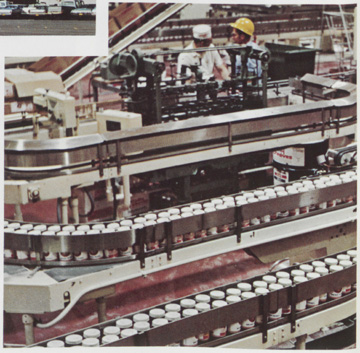
On Saturday, September 6, current leadership at Nestlé invited all current employees and retirees and their families to a special fun day on their front lawn. Outside, everyone was able to enjoy a few special presentations and a meal, plus there were bounce houses for kids.
Inside, plant management provided tours for the community and presented videos on operations. While the factory is one of the smallest in Nestlé’s footprint in the United States, its vital role in producing one of its most profitable products remains strong in the Jacksonville area.
Current plant manager Martin Craig says that the current roster of employees maintains a high-quality product. The plant currently has two employees who have been around since the first day of operations. (See their story on Page 5). “It’s not too uncommon to see employees at older plants like this one sticking around that long,” Craig says. “When I was with the Waverly, Iowa factory that had its 100th anniversary a couple of years ago, they had an employee there who had been with that plant for 50 years. When you get into some of the older Nestlé factories, because Nestlé treats their people very well, most people want to stay.”
Craig says it is wonderful to hear stories from employees who have stayed that long and to listen about how changes have taken place and things have evolved. He says it makes Nestlé a safe, family-like environment where people want to come to work each day.
