
By Chad Boehlke
Going to the movies is always special. What makes it special is not just the popcorn, candy and soda — or your shoes sticking to the floor— but sitting in the dark and watching the magic of Hollywood on the silver screen.
Jacksonville’s movie theater history began in 1902 with early cinemas. This new entertainment followed on the heels of vaudeville and the penny arcades. The term “moving pictures” was an early description of movies, and the public was excited to see this new technology larger than life on the screen.
The first movies were silent films, originating from the film studios of the East Coast before the industry shifted to California. Movies changed forever when, in 1927, the movie “The Jazz Singer” marked a significant milestone as the first “Talky,” ushering in a new era of sound in cinema. The price of tickets, ranging from five to 25 cents, made movies accessible to everyone unless you were African American at that time.
Most theaters had a “Designated Negro Seating Area,” which was sometimes in the back of the theater or the balcony. A local Jacksonville theater owner, in 1914, was sued over segregated seating. Grace and Gladys Mallory sued Green Luttrell because Luttrell insisted that they sit in the designated area for African Americans. In a hearing before a judge, the verdict favored Luttrell because the theater could only be entered by paying the owner, and the owner had the right to seat his paying guest as he pleased.
Before the first movie house in Jacksonville, moving pictures were played at different locations, such as Oden Hall on West State, Nichols Park, and Bethel A.M.E. Church. Oden Hall advertised that movies are at “2:30 on Sundays with a ticket price of 15 cents.”
Jacksonville had, over the years, seven movie theaters. The Gaiety Theater, The Gem Theater, Airdrome Open Air Movies, Bijou Theater, Luttrell’s Majestic Theater, Times Theater, and Illinois Theater. Some of these theater buildings were built initially as merchant stores that were converted into vaudeville theaters with a screen to show movies.
Thomas Scott’s Movie Theaters
The Gaity Moving Picture Theater, established in 1905 at 61 East Side Square of the Square, was one of Jacksonville’s earliest movie theaters until 1927. Later, the original theater building was replaced by a two-story art deco building, which now houses a record store. The person who played a pivotal role in establishing the first movie house in Jacksonville in 1905 was Thomas S. Scott. Born in 1869 to James and Sarah Scott of Jacksonville, Thomas married Beulah McClintock in 1897. His journey into the movie theater business started when he began as a shoe salesman for the Burgert and Gilman store in 1902.
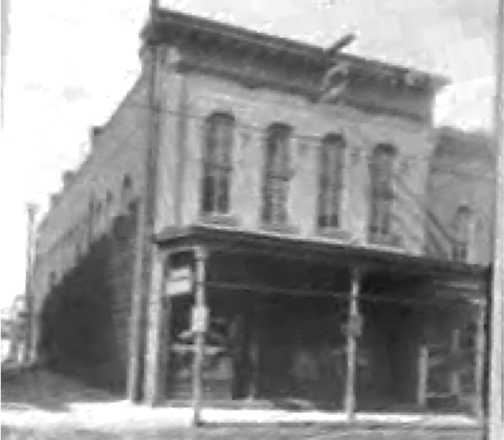
was Henry Ricks’ Bar, circa 1900.
A year later, Scott started in the movie business. Scott and a partner, Thomas Allen, owned and operated a mobile moving picture show. One of those places Scott would show movies was the second floor of the Y.M.C.A. The first real movie house he opened was The Gem Theater. Opened in 1913 on the third floor of the Sturgis Furniture Store located at 28 North Side of the Square, where Lincoln Land Community College is today. The Gem Theater closed before 1915.
Scott opened one of the most unusual theaters in 1914, the Airdrome Open-Air Theater. This outdoor theater was located at 221 East Morgan, now a parking lot. It had a weatherproof screen that closed when not used at the South end and a ticket booth on the North end, located on East Morgan Street, with chairs in between. It closed a year later, and the lot was sold.
By 1927, Scott opened two new movie houses, Scott’s New Theater, 239 East State St.; and Scott’s New Grand Theater, now Illinois Theater. His movie house empire lasted until 1927, when he sold his theaters for $75,000 to the Jacksonville Theater Company. After selling out and working several jobs, he opened the Illinois Café in 1934, next to the Illinois Theater. Four years later, he died, and is buried at East Cemetery.
Finley’s Bijou Theater
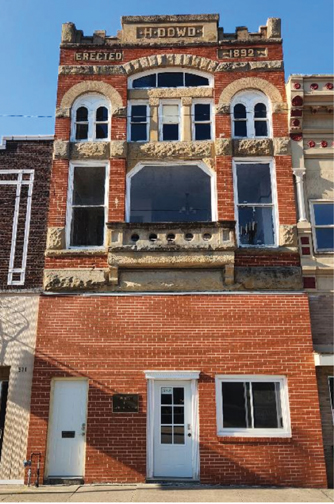
The Bijou Theater, located at 313 West State St., across from the county courthouse, was open 1906 for a year. Bijou, French for fancy theater, was a single screen with 200 seats. It started as a vaudeville that showed mostly French silent movies. The Dowd building was initially built in 1892, and the theater occupied the first floor of the building.
By 1907, the theater stopped showing movies and installed Nickelodeons, a type of arcade game. This building was owned by Andrew and Agnes Finley, who were merchants. When Andrew Finley died in 1906, it was at this time that Agnes turned the store into a theater. She hired Mr. Brown to sing for the silent French films, and Mr. Thomas Scott managed the theater. Today, it is a law office.
Green M. Luttrell’s Majestic Theater
In 1913, The Majestic Theater at 220 East State St. was opened by Greene M. Luttrell. A native of Jacksonville, Luttrell was born during the Civil War, was a bachelor, and was buried at Diamond Grove Cemetery. But before owning a theater, Luttrell was the manager of the Grand Opera Theater in 1902. Later, he moved to Lincoln, Nebraska, to manage the Gold Eagle Mining Company until 1913, when he returned to Jacksonville to open the Majestic.
The name was changed several times, including Luttrell’s Majestic, New Majestic, and Fox Majestic Theater. This was a 458-seat vaudeville and movie theater that showed weekly films. 1924, he added a new pipe organ to improve the moviegoer’s experience. By 1928/1929, he sold the Majestic to the Jacksonville Theater Company, which already owned Thomas Scott’s theaters and the Rialto Theater.
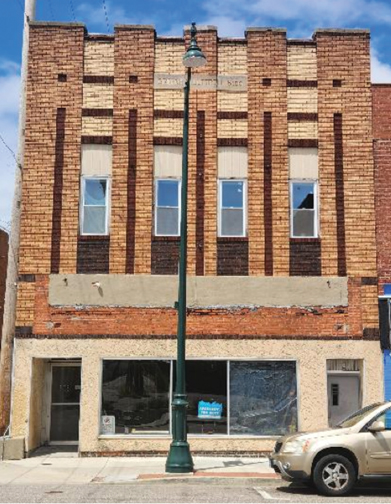
At this time, a new sound system was added to the Majestic. Later, the Jacksonville Theater Company sold out to the Fox Midwest Theater Company. In 1937, Fox remolded the façade of the Luttrell building in the Art Deco style and had a “name the theater contest.” The new name selected was Fox Majestic, used until it closed in 1953. Afterward, the theater became a Sherwin-Williams paint store; the building is being renovated, and the second-story windows have replaced the glass blocks.
John Hodges’ Rialto Theater, Times Theater
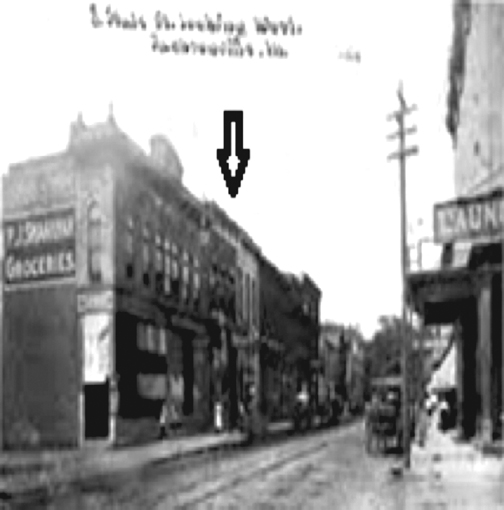
Before it was The Times Theater, the Rialto Theater operated from 1919 to 1929. The building at 231 East State St. was built about 1887 as a store that sold marble. For the next 29 years, the building was a bowling alley and a candy store until 1916, when Harry Hart opened an arcade. Two years later, in 1918, the arcade closed, and John Hodges opened the Rialto Movie Theater. Hodges sold it to Charles Volmer from Belleville, Illinois. Volmer leased the theater to Jas. C. Weber until it was sold to the Jacksonville Theater Company in 1927.
The Rialto had a significant fire in January of 1929 and closed. After repairs, the building was used as a laundry mat and then a shoe store for the next ten years before becoming a movie theater again. The building was eventually remodeled into an Art Modern style with a neon triangular canopy marquee and a beige-colored metal tile façade.
In 1953, the Times caught on fire, and for a short time, the Majestic Theater, located nearby, was used until repairs to the Times were made. Later, the Times was sold to the EL Fran Theater Circuit and then the Fox Theater Corporation. The Times Theater closed in 2011.
Grand Opera House- Illinois Theater
The Grand Opera House was built in 1892 by J.H. Osborn and the brothers Charles and William Routt. The original 90 by 180-foot building had over 500 gas lights and was four stories tall with a hotel. It had a stage for entertainment and a screen for motion pictures. In 1927, the new owner, D. Frisini Company, had the old opera remodeled into a modern movie theater. The lobby became 18 feet wide, with a fireproof balcony and a modern pipe organ that can seat 1,300 to 1,400 people during a show, at a cost of $20,000, or $346,605.65 by today’s value.
The theater was sold to the Fox Theater Corporation in 1937, and the old opera house that had hosted many entertainment events was razed. The new movie theater, built on-site, was a modern building with air conditioning. Fox operated the theater until Kerasotes Theaters took over in the 1970s. By 2008, Illinois was sold to an independent owner who added other screens and digital projection. It was sold again in 2018 to the Eisentraut Theaters and now plays the latest films from Hollywood.
Jacksonville’s 122-year movie theater history is still strong with Illinois Theater on the square and South County in South Jacksonville. Movies are also changing with the new artificial intelligence technology, ushering in a new era of cinema. Today, movies are made all over the globe, and with cell phones, anyone can make movies and post them for all to see.
Jacksonville movie theaters
1892-1927/1937-Present: Grand Opera House, Fox Theater, Illinois Theater, vaudeville, movies, 200 E. Court
1902-Unknown: Moving Picture Theater, possibly The Gem Theater (1913-1915), movies, 28 N. Side Square, now Lincoln Land College
1905-1927: Gaiety, New Scott Theaters, New Grand Theater, movies, possible vaudeville, 61 E. Side Square, now a record shop
1906-1907: Bijou Theater, movies, vaudeville, 313 West State, now a law office
1913-1953: Majestic, Fox, movies, possible vaudeville, 220 E. State, currently vacant
1914-1915: Thomas Scott’s Airdrome Open Air Theater, movies, possible vaudeville, now a parking lot
1919-1929/1940-2011: Rialto/Times, movies, 231 E. State, currently closed
