


What’s the beef?
By Jenny Sauer-Schmidgall
Wagyu beef originates from Japan and is renowned for its extensive marbling and buttery texture. The word “Wagyu” literally means “Japanese cow,” and these cattle are often raised under strict protocols to ensure the highest quality of meat. The meticulous care, including a specialized diet and sometimes even massages, contributes to Wagyu’s distinct flavor and tenderness.
Angus beef originates from Scotland and is prized for its flavor and tender meat texture. The breed was brought to the Americas in the late 19th century and has since become one of the most popular choices for beef production in the United States.
So where does Wangus come from? Well, it’s right in the middle. Wangus, which is what we call our herd members, are half Wagyu and half Angus.
Most Wagyu cattle in the United States originate from a single U.S. Wagyu bull. There is a story about Japan not allowing the U.S. to have a Wagyu bull back in the 70s, so the U.S. went around that by having them shipped to Australia and then into the U.S. Whether or not this is true, I can’t tell you, but it sounds very feasible.
So why in the world did we try crossing our Angus with Wagyu? Well, it was all sort of happenstance. I lost my father, Hunter Sauer, unexpectedly a couple years ago, and I farmed with him full-time. He taught me practically everything he knew about the farm and cattle. My grandfather, Andy Sauer, and my dad both started having cattle as a supplemental income for when the row crop commodity prices tanked or the crop wasn’t very great in a year. This is how I looked at cattle: big, tasty pets and as means of a supplemental income. Angus is practically everywhere. Wagyu is very well known, but is ridiculously expensive. One of my great cattle friends, Peanut Coleman, who lives in the state of Virginia, told me about the Wangus. We chatted more about them, and decided, “Well, why the heck not try it?” He had raised some Wangus and we decided to crossbreed some of our Angus with his Wagyu via artificial insemination.
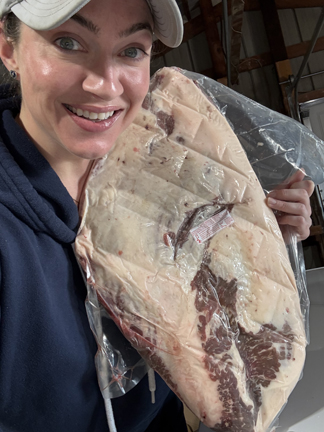
My husband and I had already started on building the store in Riggston (Grab ’N’ Grow Greenhouse by The Witty Farmer), and I wanted to have something different compared to other stores. Raising cattle takes a very long time. It’s not like a chicken or even a pig, which still takes time. The cow has to get pregnant, carry the calf for nine months and then you need to get the calf up to proper weight for processing, which is about a 2 and a 1/2 year process. Needless to say, you need to plan ahead. Now we have some of the first Wangus in the State of Illinois. There are others in the United States, but it’s much more rare to find Wangus than it is to find Wagyu and Angus in the entire country.
I grew up on our Angus beef. It tasted amazing, I couldn’t eat beef anywhere but my home because it tasted entirely different elsewhere. Even the color of it is different. Each cow has its own beef color, kind of like people. We all have our own unique skin color, whether it be very noticeable or not. Cows do as well. Some beef is darker or lighter when compared to others. When Peoria, Illinois had their stock yards, we would take our cattle there, and they would be butchered kosher and then shipped to Chicago steakhouses. I was pretty spoiled when it came to eating beef. With all of that being said I thought our Angus beef was some of the best, that is until I tried our Wangus beef.
So what’s the difference between the three?
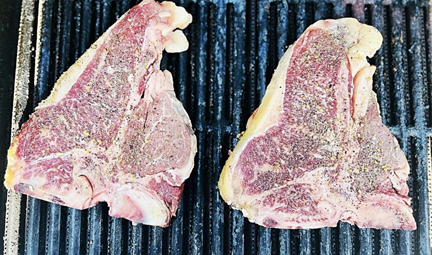
Wagyu is very fatty and very expensive. Angus is very tender and has an excellent, beefy flavor (like Wagyu in a sense), but is more affordable. Wagyu has a buttery fat flavor but a lot of it. Wangus is basically the best of both of these worlds. Wangus beef has the beautiful marbling of the Wagyu beef but a little less of it and the extreme tender texture of Angus beef. It’s like eating a prime Angus ribeye that tastes like Wagyu but doesn’t cost 1,000 times more. When my husband, Mark, and I tried one for the first time, we couldn’t believe it. The fat tasted like a clarified butter. Our daughter, Hunter, stole a piece of fat we cut off of the T-bone and started eating it. I thought it was gross at first, but you can literally rub the fat between your fingers and it falls apart. It is not a fat that stays solid and a little melty. It’s basically a fancy layer of butter outlining your cut of meat. It’s out of this world good, and still affordable. Don’t even get me started on the filets.
Jenny Sauer-Schmidgall is a third-generation farmer in Scott County. Jenny and her husband, Mark, operate a row crop farm and tend to a herd of 80 cattle. They own and operate the farmers market style store, The Witty Farmer/Grab ‘n’ Grow Greenhouse, in Riggston.
