
Properly maintaining your pasture
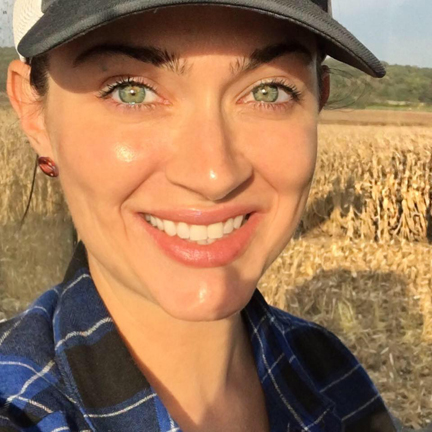
By Jenny Sauer-Schmidgall
In our world of livestock, the saying “one size fits all” definitely does not apply. I will share our experience on what has and has not worked over the years.
I like to look at the pasture as your yard. Everyone wants their yard not only to look good, but to function well in times of wet or dry weather. In order to have such a yard, you need to maintain it properly.
Weeds
One of the main housekeeping items is weeds. In pastures, a weed such as thistle is not good. It’s spiky and not edible to cattle (which is our concern). The flower may be pretty, but it’s not something you want in your pasture as it can be rather invasive if left to go to seed.
A couple of things that can solve this issue is the use of Roundup weed control, a sprayer, and shoot and spray at the crown. The other option we practice more now is mowing/cutting them. This option takes more time, but if you’re able to cut down the thistle via corn knife or mower blades before flowering and becoming too large, they do not become a problem.
Roundup works great, but it’s a chemical, and one needs to be extremely careful when dealing with chemicals. If you’ve had a pasture that has not been well-maintained and is full of thistles or other types of very large weeds, then you need to basically start over. Mow it down with a batwing shredder and possibly spread some pasture-guard, and then reseed in the fall.
Back to the yard analogy … if you mow your yard with some frequency in general, you keep the weeds from becoming invasive and killing all of the good grass. The same goes for your pasture, but there’s no need to mow it as much as a yard.
We don’t have a specific timeline. We simply go to the pasture, look and assess. If it looks like the grass and weeds are getting too tall, like over the “knees” of the cattle, then we would lower the batwing shredder down (not all the way down as low as it can go) and then cut.
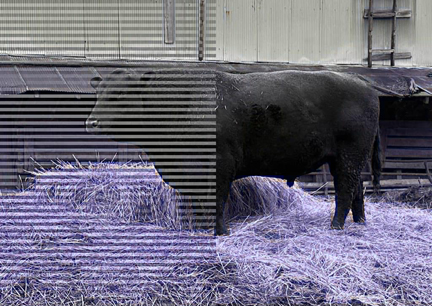
You have to have a really great rainy summer season to have really tall grass as a problem. We like to take a more simplified approach. There are others who are much more particular.
Another part of this is that if you take care of your pasture, it helps with the “bad” bugs and it helps to keep the numbers down anyway.
If bugs, like ticks, become a large problem, then you really need to do what you can to get rid of them rather than decimate your herd and have them suffer. Easier said than done, but it is possible. This may be an unpopular opinion, but I’d rather save my cattle than worry about killing a specific species of grass or clover. I can get that to grow back, but growing back a herd — that takes years.
Fertilizing
We do not fertilize our pasture. We fertilize our hay fields with the bare minimum fertilizer every other year. With the current prices of commodities, I don’t really feel like spending much on fertilizer for hay (and that feeling changes as we have more income).
We are lucky enough to have good dirt, and there really isn’t a necessity to fertilize where the cows roam. Are you able to do it? Yes, we just simply don’t. The cows fertilize it pretty well on their own, and fertilizer can be rather expensive. Again, it’s a very simplified and cost-effective way of doing things, it’s just not how everyone operates.
We also don’t sell hay everywhere. We only grow enough for our own cattle, enough extra for a possible dry year, and enough for the people that help us cut hay. If we were bigger into the hay business, then more expense would go to fertilizer and it would be put on the paddocks that would not be used for awhile, like say a month.
Ideally, I would wait until after a good rain to let the cattle back in, and moisture is necessary to get the urea (Nitrogen) into the soil. I have never done it, and don’t plan on doing so, but if I were, I would wait a ridiculous amount of time to ensure that it was not going to be around while cattle were grazing.
Rotating
Rotating is not something that we practiced much because we never had too many cows for the amount of acreage available. We are now starting to move toward creating paddocks within the pastures in order to be even more effective and efficient. It’s pretty easy to let the cows roam all over; however, when having the pastures divided up into equal parts to accommodate the amount of cattle properly within that section, they’re basically tasty lawnmowers. They keep the weeds down and keep it clean. Then, after about 28 days, you move them to the next section, and on and on. It’s very effective and keeps your pasture much more well-maintained without a whole lot of work. The cows basically do the work for you like God intended. It’s also a lot of fun to see them jumping for joy when they realize they get to move to the place right next to them.
You know the saying, “The grass is always greener on the other side?” Yeah, cows take that saying literally every day. Like my dad, Hunter Sauer, said, “NEVER trust a cow.” They’re cute. They taste good, but they’ll walk through anything that looks like an open hole, or push that gate open that you didn’t latch good enough because you were in a rush.
In summary, we try to stay away from anything that could harm our cattle and stay as natural and organic as possible. We treat them like our pets. When they’re happy, they also taste better. We give the animal the respect they deserve since they are giving their life to feed us in the end. Give them a good life, and they’ll give you the best nutrition.
Jenny Sauer-Schmidgall is a third-generation farmer in Scott County. She and her husband, Mark, run the family farm with 80 head of cattle across two areas in rural Scott County. The Sauer family has had cattle in the region for over six decades. The Sauers traditionally have raised Black Angus and have now introduced Wangus. Schmidgall‛s grandfather, Andy Sauer, and father, Hunter Sauer, started to have cattle as a supplemental income during bad years for row crops. Schmidgall has increased her herd gradually to keep up with beef demand in the region through their farmers market store, The Witty Farmer/Grab ‛N’ Grow Greenhouse, in Riggston. The store will be expanding to a new location soon.
