
The importance of feeding your brain
By Clara and Justin Hamel
Most people know the feeling. Around three o’clock in the afternoon, it’s as if you hit a wall. You stare at your computer, but nothing seems to register. You find yourself reading the same email over and over without absorbing a single word. All of a sudden, a nap sounds irresistible, or maybe it feels like a sugar-laden snack is the perfect solution.
Most people simply chalk it up to being tired, or running out of steam, but it is worth asking what is actually running out.
Let’s start with a surprising number: two.
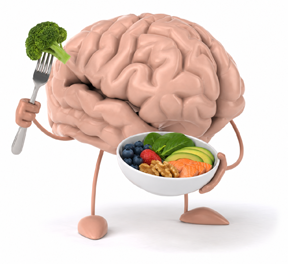
What does the number two have to do with your brain? Your brain makes up only about 2% of your body weight, yet it uses roughly 20% of the energy your body produces. Pound for pound, it’s the most energy hungry organ you have. In many ways, it’s the most expensive thing you own. And unlike you, it never really takes a break. Even while you’re asleep, it’s hard at work.
Now the part that matters, it has almost no reserve tank.
Your muscles store fuel. Your liver stashes away a variety of nutrients. Your fat tissue stores energy for times of need. Your brain, functionally, does not. It lives meal to meal, breath to breath, minute to minute, entirely dependent on what your bloodstream at that moment. Cut off the supply, and the brain doesn’t shut down. It begins to economize. And the first things it economizes on are the expensive luxuries: focus, patience, word retrieval, short-term memory.
If those sound familiar, it’s because they’re the abilities most people notice slipping when their energy starts to fade.
Inside every cell are amazing tiny structures called mitochondria. Mitochondria are responsible for turning fuel and oxygen into usable energy. Brain cells are packed with them, hence brain cells are hungry. When that production line is running well, thinking feels effortless. When it’s struggling, thinking feels like work.
This is why brain symptoms are so often situational. Not constant — situational. Worse at three o’clock. Worse when you skip breakfast. Worse when you’re stressed. Worse the day after a bad night. If your symptoms were caused by something permanent, they’d be permanent. The fact that they come and go is one of the most encouraging things about them, and almost nobody notices it.
Then there’s the rollercoaster. A breakfast of coffee and toast sends blood sugar up fast, and what goes up that fast comes down just as fast. The crash lands somewhere around mid-morning. Lunch repeats the cycle. By three in the afternoon, you’ve ridden it twice and you’re out of runway.
Here’s the thing about riding a roller coaster every day for 30 years: Eventually, you stop noticing you’re on one. You just assume it is what afternoons feel like.
So, here’s this week’s homework. It costs nothing and requires no appointment.
For one week, rate your thinking a few times a day. Is it sharp, foggy or somewhere in between? After assessing your thoughts, look back at what you ate around three hours before each entry, and how you slept the night before.
Most people find the pattern within four days. It’s usually not subtle. And once you see it, you can’t unsee it.
One more thing is worth saying plainly: Fuel delivery isn’t a mystery you have to guess at. It can be measured. So can most of what we’ll cover in this series.
Next week, we’ll look at the other half of the equation. Fuel alone isn’t enough. Without the other half, none of it works, and a surprising number of people are quietly running short.
*Dr. Justin Hamel and Clara Hamel have a combined over 30 years of experience in health fields. Reach them at 1° Performance & Longevity, located at 46 N. Central Park Plz., Suite 101, in Jacksonville, on Facebook or by phone at 217-243-6358.
