
The legacy of Black music and the role of Jacksonville’s Capitol Record plant
By Ben Cox
Photos/Ben Cox
One of the many storied chapters in Jacksonville’s history is the opening of the Jacksonville Capitol Records pressing plant on July 12, 1965.
The celebration was held downtown and featured The Lettermen. The Terry Brennan Trio played earlier in the celebration and then backed up The Lettermen for their concert.
Capitol Records saw the opening of a distribution center in the Midwest as necessary to compete with the highly productive plant in nearby Terre Haute, Indiana, run by their competitors. The record company also saw a high demand for The Beatles (then later The Beach Boys) and needed to keep up.
Due to differences in how albums were structured (fewer tracks, including singles), Capitol issued unique, shorter albums in the U.S. compared to the UK Parlophone releases. Capitol A&R executive Dave Dexter Jr. often added reverb and echo to the, at times, second- or third-generation master tapes, creating a unique sound for the American market.
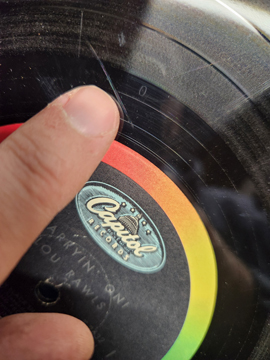
The “0” etched in the runouts of dead wax of records indicates a particular Capitol Records album (as well as a variety of other labels) indicates the record was made in Jacksonville. Other indicators include the etching of “JW” in some deadwax runouts.
Jacksonville would see its fair share of “Meet the Beatles!” (Jan 1964), “The Beatles’ Second Album” (April 1964), “Something New” (July 1964), “Beatles ’65” (Dec 1964), “Help!” (Soundtrack) (Aug 1965), and “Rubber Soul” (Dec 1965) pressings and repressings over the early years of its tenure in the Elm City.
However, Capitol’s catalog was much bigger. In the mid-60s, Black music from Motown and the Gordy label were everywhere. The Beatles and The Beach Boys were borrowing heavily from them. It was at this time that Curtis Mayfield and The Impressions emerged from Chicago as a competitive force to what Berry Gordy was producing, and in 1965, The Impressions took away some of Motown’s chart mojo with the release of their album “People Get Ready.” Prior to that, The Impressions’ “Keep On Pushing” in 1964 had also pushed back against the Motown dominance.
Why does all of that matter? The Impressions’ albums were some of the first Black popular music to be pressed in the City of Jacksonville. The Capitol Record Club contracted to press both albums for ABC-Paramount. The “0” in the deadwax runouts would be a fixture in vinyl records until 1986 when Capitol would remove vinyl pressing equipment in Jacksonville and bring in CD duplication.
The only other major Black artists that Jacksonville would press during its early period would be some of the mad genius of Phil Spector and his girl groups like The Ronettes. As far as jazz artists, Count Basie and organist Jimmy Smith would appear early on with some highly collectible Cannonball Adderly Quintet, Ella Fitzgerald and “The Fourth Way” records coming later in the 60s.
The first truly Capitol artist that was Black to get exclusive pressings in Jacksonville was pop jazz singer Nancy Wilson in late 1965. Between March 1964 and June 1965, four of Wilson’s albums hit the Top 10 on Billboard’s Top LPs chart and she would have over a dozen songs crack into the top of the charts. She was also a face on several variety shows on television throughout the mid to late 60s.
The first Black male talent solely in Capitol’s bailiwick to see significant pressings in Jacksonville was Lou Rawls, despite many of his big hits coming on earlier albums prior to 1965. Rawls’ mid-60s releases like “Soulin’” and “Carryin’ On” would be integral to his career as he bridged the gap between his early R&B roots working with Sam Cooke to his later era as a go-between modern R&B and even disco.
Another oft-forgot early chapter in the pages of R&B and soul music is that of King Curtis. The Texas-born saxophone player and bandleader is best known for his time backing Aretha Franklin and his instrumental “Soul Serenade.” The famous instrumental originally appeared in the middle of three releases he recorded for Capitol between 1962-1965. None of the trilogy sold well, but the works on them were foundational for the work that Curtis would produce later on as one of the most sought-after session musicians and bandleaders in soul music.
One more sideman of famous proportions saw pressings at the Jacksonville plant. Billy Preston, known by many as the 5th Beatle from the “Let It Be” album and from side work with Ray Charles, had one of his first notable releases on Capitol.
“Wildest Organ In Town!” was originally released in 1966, but wasn’t pressed in Jacksonville but rather at Capitol’s two bigger plants in Scranton, Pennsylvania and Los Angeles. However, by the early 70s, after Preston’s work with The Beatles, Capitol reissued the album and Jacksonville and the new Winchester, Virginia plant that had gone into production in 1969 repressed it. The Jacksonville plant handled most of the reissue work initially.
In between, Capitol made significant money on The Beatles, The Beach Boys, Frank Sinatra, Buck Owens, Sonny James and several artists from beyond Capitol’s contracts due to its record club. These included several Black jazz artists who recorded for Blue Note.
By the end of 1966, the factory was pressing 50,000 albums a day for multiple labels. The factory became known as “The House the Beatles Built.” And much of America’s rock and soul foundation was passing through the Jacksonville walls.
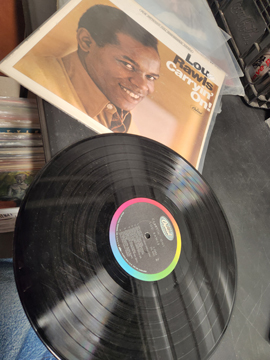
This copy of Lou Rawls’ 1966 release “Carryin’ On” was printed in Jacksonville. Rawls saw many of his mid-60s releases printed in Jacksonville. “Carryin’ On!” went to #2 in the Billboard R&B Albums Charts, to #3 in the Jazz Albums Charts and to #20 in the Pop Albums Charts. It capped a highly successful year for Rawls, as he had finally become a household name in American music.
Capitol would also begin dipping its toes in other forms of popular music. Ravi Shankar would release an album for Capitol by the end of the 60s and the label would sign its first gospel act. The Art Reynolds Singers’ “Tellin’ It Like It Is” was the first gospel release. By the end of the label’s life in Jacksonville, Capitol’s Christian Music Division would be housed in Jacksonville before its permanent departure from the city.
The Art Reynolds Singers were culturally significant, too. The debut album was one of the biggest selling albums for a new gospel group of all time and included the song “Jesus Is Just Alright,” which would later be covered famously by The Byrds and The Doobie Brothers.
However, the album and the three records that followed never drew print in Jacksonville and was handled by the two big sister plants. All of them are sadly out of print and highly collectible.
The end of the 1960s saw psychedelia and blues-rock take hold of American audiences with the major cultural phenomena of the Monterrey Pop Festival and Woodstock. One of the biggest musical celebrities to arise from both of those significant musical and cultural moments was Jimi Hendrix.
Hendrix appeared on a small number of releases at the end of the decade on Capitol with Harlem-based singer Curtis Knight. In 1965, Knight had recorded some singles and demos for record producer Ed Chalpin with Hendrix as the guitar player. Hendrix had fled to England to form the Jimi Hendrix Experience and forgot about a contract with Chalpin and the sessions with Knight.
After Hendrix became famous, Knight and Chalpin issued the sessions, including the ones at Capitol, resulting in years of legal action by both sides. The Hendrix Estate gained control of the recordings in 2003 and began releasing them again in spurts after they had sat out of print in the U.S. or only available on imported, small label versions for several decades.
The original Capitol recordings are easily captured and are partially must-have records for Hendrix completeists.
Hendrix would later return to Capitol in 1970 with the release of the seminal “Band of Gypsys” album. Original pressings are noted by a green label while later era reissues and represses had the orange labels. The company had moved on from its traditional black and rainbow colored label from the 60s, and the Hendrix release was one of the first notable ones at the Jacksonville plant to have the newer labels.
Capitol was also a part of another major coup in the soul and R&B world. Bettye Swann, who recorded for Capitol in a girl group called The Fawns in the early 60s, had branched off on her own and scored a couple of major hits for the Money label for DJ Alton Scott, who was her manager. She left Scott and Money records and returned to the South where she eventually won a solo contract with Capitol and released two albums and a handful of singles for the label.
The move proved to be a successful middle period for Swann as she scored an R&B hit in 1969 with a cover of Jeannie Seely’s “Don’t Touch Me” and covered some country songs, turning them into pure soul. Both LPs and a number of the 45s were pressed in Jacksonville.
Blues had never really been a major part of the Capitol catalog, especially in Jacksonville where rock and country dominated pressings. However, in 1969, blues finally came to Jacksonville with the phenomenal album, “I Do Not Play no Rock and Roll,” by Mississippi Fred McDowell.
It’s a masterclass, a confessional, a musical statement and a history lesson all in one about the Delta’s rich gift to American music. Recorded at the now-destroyed Malaco Studios in Jackson, Mississippi, the album proved enormously popular, becoming a Grammy nominee when traditional Mississippi Blues was virtually unrecognized by the recording industry.
An original Jacksonville pressing is highly collectible. The Jacksonville plant also pressed the reissue in 1974 that can be gotten for a more affordable sum for someone curious about this unique treasure of American music.
Blues fans would get another unique hook up in the early 70s when Jimmy McGriff and Junior Parker would unite for a one-off LP entitled “The Dudes Doin’ Business.” The rhythm section was top-notch and the material was familiar but the production added “strings, insipid soprano choruses” and horns according to critic Robert Christgau. What should have been great, was botched. The Jacksonville pressing is easily gotten and should probably only be sought after if you are a completeist of either artists’ discography.
The last real powerful blues release that was printed in Capitol-Jacksonville’s early period was the James Cotton Blues Band’s “Taking Care of Business” in 1971. The album features side work by guitarist Matt “Guitar” Murphy, Cissy Houston, Todd Rundgren, Mike Bloomfield, Richie Hayward, David Sanborn, Gene Dinwiddie and Johnny Winter. Rundgren and pianist Mark Klingman produced the record at The Record Plant and Bearville Studios in New York.
It was a powerful period for Cotton, the former harmonica player for Muddy Waters, at the time. Cotton and Winter would go on to unite with Waters at the end of the decade as a part of Waters’ late career revival. I imagine some of the conversations about getting together with Muddy likely started here. Mike Bloomfield would be gone from heroin addiction by the end of the year.
By the 1970s, Jacksonville was the largest producer of reissues for the Capitol catalog and also handled a good number of large releases from its mainstream acts until it ceased vinyl production in 1986.
Black artists that were mixed in with all of these acts that performed well on the charts were Natalie Cole, Melba Moore, Minnie Riperton and later Peabo Bryson, Ashford & Simpson and Ronnie Laws.
The Jacksonville plant shifted to CDs right as hip-hop and rap took hold so several late 80s Capitol hip-hop/rap artists likely had their initial CD runs in Jacksonville after 1986. CDs and later DVDs remained in production for Capitol/EMI until 2004. After that, Jacksonville was simply a distribution hub until the site permanently closed in 2013 moving most of its operations to its home base in Los Angeles.
As previously mentioned, EMI’s Christian division had offices for a short time before they moved out, as well. Goodwill Industries took over the site as an outlet and warehouse in 2015, with the front offices still remaining vacant.
