



Routt senior experiences ‘a way of life that … you can’t imagine’ in Peru
By Ben Cox
Photos/Submitted to The Source
Hayden Hamel is a senior at Routt Catholic High School. He’s already made headlines for enlisting in the Illinois Air National Guard’s 183rd Wing. However, his service above self started much sooner.
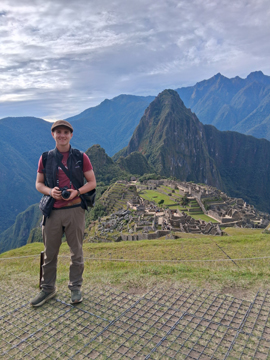
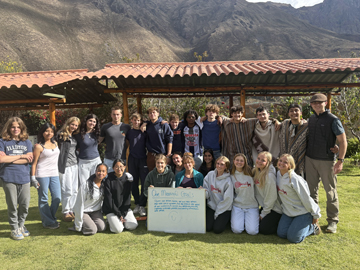
This past summer prior to the school year, Hamel signed up for a service expedition with Global Leadership Adventures to Peru. The two-week trip had stops in Machu Picchu, Cuzco and Ollantaytambo, among others.
Hamel described the trip as both uplifting and eye-opening on a personal and global level.
Ben Cox: Tell me how you found out about this trip.
Hayden Hamel: I’ve been interested in programs like the Peace Corps and I’ve always been interested in traveling. So, I was just looking through that and eventually my dad one day found a program that was similar to the Peace Corps that you could do in high school, which was the program I went on — G.L.A., Global Leadership Adventures. He showed it to me and after that it just kind of grew my interest … grew over a couple of years, and eventually, I just pulled the trigger and decided to take a trip.
BC: Was this a service trip where you’re teaching kids how to read or were you building stuff? How does it work?
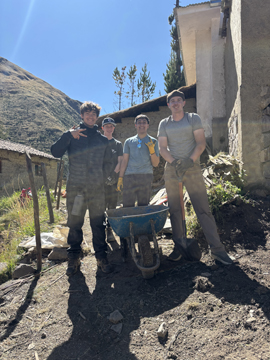
HH: In the organization there’s a lot of different trips that have a lot of different goals. Mine specifically was helping build a community center in a rural town in Peru named Patacancha. We helped put mud on the walls. My job personally was moving a lot of earth … filling bags of earth and moving them to where they needed it. That took, I think, it was around 15 to 16 hours of just work in total [during] the entire trip.
BC: What was your interaction like with the folks who lived in Patacancha?
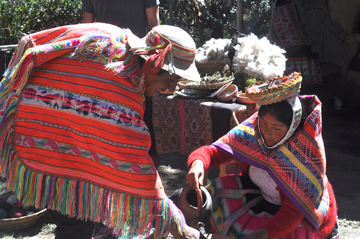
HH: It was pretty great. It’s such a different way of life and it’s a way of life that you almost can’t really imagine and it seems very fulfilling and everyone was extremely nice and one of their forms of greeting is hugging everybody. So, even if you don’t know someone, they’ll come up and give you a big bear hug. Everyone was just super funny or fun and nice and I would say even nicer than here [in Jacksonville]. It was just because it’s more of a community because they’re built around agriculture and farming. Everyone kind of works together.
BC: That partially answers my next question. When people generally think of South America, they think of rain forest and kind of a tropical climate. What was the topography like where you were at?
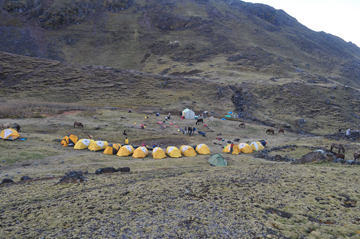
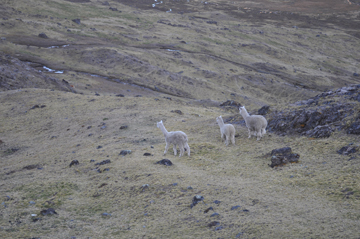
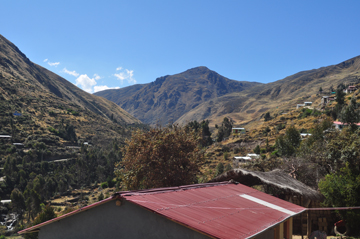
HH: We were pretty much in the center of the Andes Mountains, so we were up around 9,000-foot, 10,000-foot elevation most of the time. We went higher later in the trip. The altitude makes you pretty sick at that level and it’s hard to do a lot of physical activity, but definitely not something you’d expect normally. It was a very dry season when I was there, so everything was brittle and brown. It wasn’t a climate I was expecting.
BC: As far as the local culture, did you get to sample food and some of the music and stuff there?
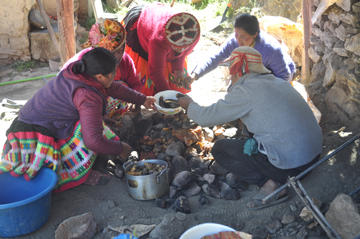
HH: Yes. We ate most of the time at this local restaurant in the town that we stayed at most of the time, Ollantaytambo. We ate there mostly. We tried Peruvian dishes, but one of the coolest meals we had was in Patacancha where we were doing our service. The meal was kind of a farewell gift. They decided to cook a traditional meal for us. They created this rock oven and they heated them by lighting a fire under the rocks, and once the fire kind of burned out, they collapsed the rocks, put food wrapped in, I believe corn husks … like different chicken, a lot of potatoes because potatoes are native to the region and corn. They put them on the hot rocks and then buried them. That steamed everything and that’s what we ate for lunch that day. That was pretty special.
BC: Are you a coffee drinker? Did you try any Peruvian coffee?
HH: That’s one of the things I found pretty interesting. I’m a pretty big coffee drinker. Their favorite coffee is Folgers even though they have some of the best coffee in the world. They don’t seem to partake in it.
BC: As far as other takeaways from the trip, you already mentioned how different it was as far as location and culture, but what were some of the philosophical things you took away from the trip? What kind of inner thoughts or feelings came about?
HH: I think just looking at how our society is compared to theirs, it’s so … everything’s so fast-paced here and there’s a lot of stress involved in our life. I’m sure there’s complexities in the local Peruvian society that I was witness to, but it just seems like it’s a way of life that we can’t really relate to or think of just because they just live simply, more simply. It’s not a bad thing at all. I mean, the people I met seem to be some of the happiest people I’ve ever met.
I think just experiencing that kind of makes you jealous in some ways. I think I will definitely try and make changes to some things in order to achieve what a lot of those people there have, because they may have less than us in terms of technology and development; but I don’t think any of them wanted more of that. I think they’re perfectly content with how they were living already.
BC: Were there any embarrassing moments or cultural faux pas that you may have experienced or were witness to during the trip? Did you see other people in your group have one of those “oops” moments?
HH: There were a lot of funny moments on the trip, but nothing necessarily related to culture. For me, just hearing some other people’s Spanish was interesting. I’m okay at speaking Spanish and some people were not very good at all. Hearing them try to communicate was a bit humorous at times. We’d have to negotiate for anything we wanted to buy because that was a big part of their culture. It’s a big thing there, to negotiate for everything because they’re always going to give a higher price, so just hearing some people try and negotiate was a bit awkward. I ended up getting the hang of it, I would say, by the end of the trip. I think just hearing some people who were not necessarily able to speak Spanish try to communicate was a little funny. Some people didn’t take any Spanish classes coming into the trip. It does remind me of one story. We were walking around the town of Ollantaytambo and we went into a juicery and I ordered a juice. I forgot exactly what fruit it was, I said “con azucar,” which means “with sugar,” and the lady behind the counter thought I said “sin azucar,” which means without sugar. I thought she had heard it correctly, but it turns out she did not. After she handed me the drink and I tried it, it was one of the worst tasting things I’ve ever had in my life. I’m sure sugar would have helped a bit. So that was one thing I messed up on.
BC: Do you still have future plans to do Peace Corps or something overseas after high school?
HH: I don’t know necessarily about the Peace Corps specifically, but I definitely want to travel more. And I think helping people in that kind of service was very fulfilling. So, I’d love to try and explore that more in different places or even in Peru again.
Hamel is the son of Clara and Justin Hamel of Jacksonville.
