
By Clara and Justin Hamel
Last week’s article focused on the health benefits of sunlight — and while sunlight is paramount, taking what nature has provided and directing and focusing it can offer additional, targeted health benefits. The use of light in this way is known as photobiomodulation and it represents an exciting approach to health that intersects natural healing and modern technology.
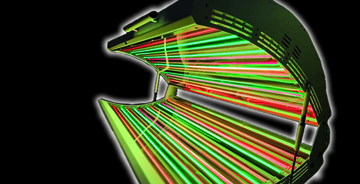
So what exactly is photobiomodulation? Well, while the term makes it sound like a classified government experiment, it is a relatively simple concept that refers to the use of low-level red and near-infrared light to stimulate cellular function. Unlike ultraviolet light, which can damage tissue in excess, these wavelengths penetrate the skin more gently and interact with our cellular mitochondria or the “power plant” of our cells. When exposed to the right type of light, mitochondria can produce energy more efficiently prompting cellular repair, regeneration and optimal cellular function.
Over the past few decades, a number of studies have highlighted the potential benefits of this therapy. Research has shown that red and near-infrared light can reduce inflammation, accelerate wound healing, and improve recovery from muscle fatigue. For example, clinical trials involving athletes have demonstrated faster recovery times and reduced soreness when photobiomodulation is applied after intense exercise. Similarly, studies in dermatology have found improvements in skin health when light therapy is used consistently. These improvements include increasing collagen production and reducing signs of aging.
In addition to the physical benefits, exciting new research is pointing to the benefits of light on brain health. The use of near infrared light on the head is called transcranial photobiomodulation and studies indicate it can support cognitive function and improve outcomes for conditions like traumatic brain injury and neurodegenerative diseases.
What makes photobiomodulation so compelling is that it builds on a natural principle. Sunlight has always been part of human health, regulating circadian rhythms, supporting vitamin D production and influencing mood. Photobiomodulation simply refines that concept, isolating specific wavelengths and delivering them in a controlled way to maximize therapeutic benefit. It is important to recognize this does not replace the importance of sunlight, but enhances and extend light’s potential. It is a therapy that takes something fundamental to life and focuses it to support the body and mind in recovery and function.
Research continues and is consistently emerging on the potential benefits of light therapy for joint health, chronic pain relief, immune function and mood disorders. Light therapy devices are becoming more accessible and clinicians are consistently refining protocols for targeted treatments.
Ultimately, the exploration of the healing power of light reflects a broader shift in how we approach health. Rather than relying solely on chemical interventions and reactive medicine, there is growing interest in harnessing and refining natural elements to support the body and provide it with the optimal capacity to heal. Photobiomodulation is a clear example of this shift that combines life sustaining elements with modern science to maximize the body’s ability to heal.
*Dr. Justin Hamel and Clara Hamel have a combined over 30 years of experience in health fields. Reach them at 1° Performance & Longevity, located at 46 N. Central Park Plz., Suite 101, in Jacksonville, on Facebook or by phone at 217-243-6358.
