
By Patsy Kelly
We can’t admit it to anyone. We don’t even care to admit it to ourselves; and when, on rare occasions we do, we feel guilt for having such feelings. But we can’t deny it, we sometimes felt relief that our loved one died. Grief takes many forms and dimensions, resulting from the conditions and length of the dying process. For many survivors of grief, the dying process was long and exhausting. We slowly watched our loved one die, often in pain, and we repeatedly felt helpless to bring them any kind of relief or comfort. But we stayed; we hung in there. We lost sleep and cut ourselves off from social activities so that we could dedicate all our time to our loved one.
We sacrificed ourselves so that our loved one would not be alone. Others suggested we take a break or allow relief to come in, or suggested that our loved one didn’t even know when we were in the room. We took what we imagined to be the high ground, and remained. We dozed in chairs, monitored the medicines, kept in constant communication with the doctors and relayed all the progress, or lack thereof, to friends and loved ones. We jumped whenever the phone rang, or when there was a shift in our loved one’s breathing. We sacrificed our own health because we didn’t want regrets to torment us when it was all over.
But when would it ever be over? We silently asked ourselves that question. Night after agonizing night, we listened to the breath, watched the chest rise and fall, waiting. Dare we speak our hope? Dare we urge them, “It’s okay to let go.” And then finally, they did let go.
They had earned their rest. And so had we. Except we can’t rest. We can’t allow ourselves to rest because we can’t allow ourselves to feel peace. We urged our beloved, the one we cared for more than any other in this world to go, to die; and we can’t free ourselves of that lingering shame.
We wanted it to end. We were exhausted, depleted and empty. We had nothing left to give, not another sip of water, not another tender word, not another telephone call. We told them, “It’s okay with me if you go,” and they did. And now, now the lingering thought remains that we hastened the death somehow. There is that suggestion that we pushed them over the edge. And if we did — oh, the guilt.
The truth is we don’t have that kind of power. We don’t have that degree of control. Something, someone else was in the room. Death happened. And we were the witness, not the wielder. We were the companion, not the cause. We were left behind to deal with all these uncomfortable feelings we call complicated grief.
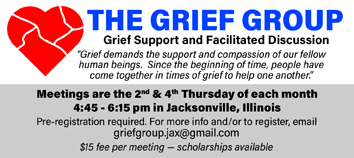
For information on the Grief Group, send your email to griefgroup.jax@gmail.com.
