
By Justin and Clara Hamel
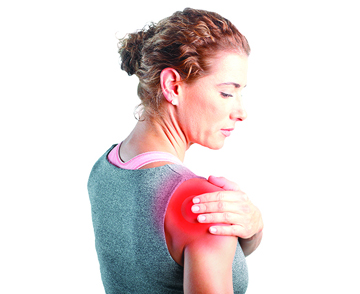
Do you have pain, stiffness and decreased range of motion in your shoulder? It could be a common condition called adhesive capsulitis, often known as frozen shoulder. Adhesive capsulitis is an inflammatory condition that involves tightening and thickening of the shoulder joint capsule. Symptoms usually start slowly and increase over time, and you are at higher risk if you have a previously injured or a surgically repaired shoulder, are aged 40 to 60 years old or have diabetes, thyroid disease, heart disease or Parkinson’s. It is also important to note that women make up 70% of the population diagnosed with frozen shoulder.
It often develops gradually over time making diagnosis a little more difficult. However there are three distinct stages:
Stage 1 – The Freezing Stage: The shoulder begins to get stiff and is painful to move. Symptoms seem to be worse at night or after intense activity. This stage last from 6 weeks to 8 months and the symptoms gradually increase over time.
Stage 2 – The Frozen Stage: During this stage, the shoulder’s mobility becomes greatly limited, but the pain can decrease. Normal activities can become extremely difficult with the limited range of motion. This phase last up to six months.
Stage 3 – The Thawing or Recovery Phase: In this stage, the pain decreases and range of motion begins to slowly improve. With the increased activity, strength and motion returns. This final phase can last from six months to two years.
If you notice any of these symptoms, the first step is get a proper medical history and physical exam to rule out other conditions such as a torn rotator cuff muscles, a labral tear or advanced arthritis. In severe cases, diagnostic imaging may be recommended.
Treatment methods and length of treatment vary and generally is determined by the severity of the case and the duration of symptoms. Often the modalities and techniques used in treatment change as the condition improves. A sample treatment plan from our clinic is outlined as follows.
- Focused Shockwave Therapy is used in more severe and chronic cases to break up scar tissue, increase rate of healing and reduce pain. Shockwave uses sound waves that can penetrate up to five inches into the body.
- Class IV Laser Therapy is used to stimulate cellular activity by increasing the production of ATP, increasing blood flow and reducing inflammation.
- Joint Mobilization uses hands-on techniques that focus on gentle mobilization of the shoulder joint to increase range of motion.
- Manual therapies, such as Instrument Assisted Soft Tissue Mobilization (IASTM), deep tissue massage and assisted stretching are used to break up soft tissue adhesions and to improve range of motion.
- Acupuncture/Needling is used to release stubborn trigger points located deep in muscle tissue.
- Exercise and Functional Rehabilitation is a series of exercise given based on symptoms and the progression of treatment. The program focuses on increasing range of motion and increasing strength.
Other techniques such as cupping, kinesio taping and localized high pressure cryotherapy may also be used to improve the progress of treatment.
While adhesive capsulitis can be a painful and debilitating condition, it is not one that must be endured long-term. With the right approach, most people experience significant improvement in both pain and range of motion.
Dr. Justin Hamel and Clara Hamel have a combined over 30 years of experience in health fields. Reach them at 1° Performance & Longevity, located at 46 N. Central Park Plz., Suite 101, in Jacksonville, on Facebook or by phone at 217-243-6358.
